
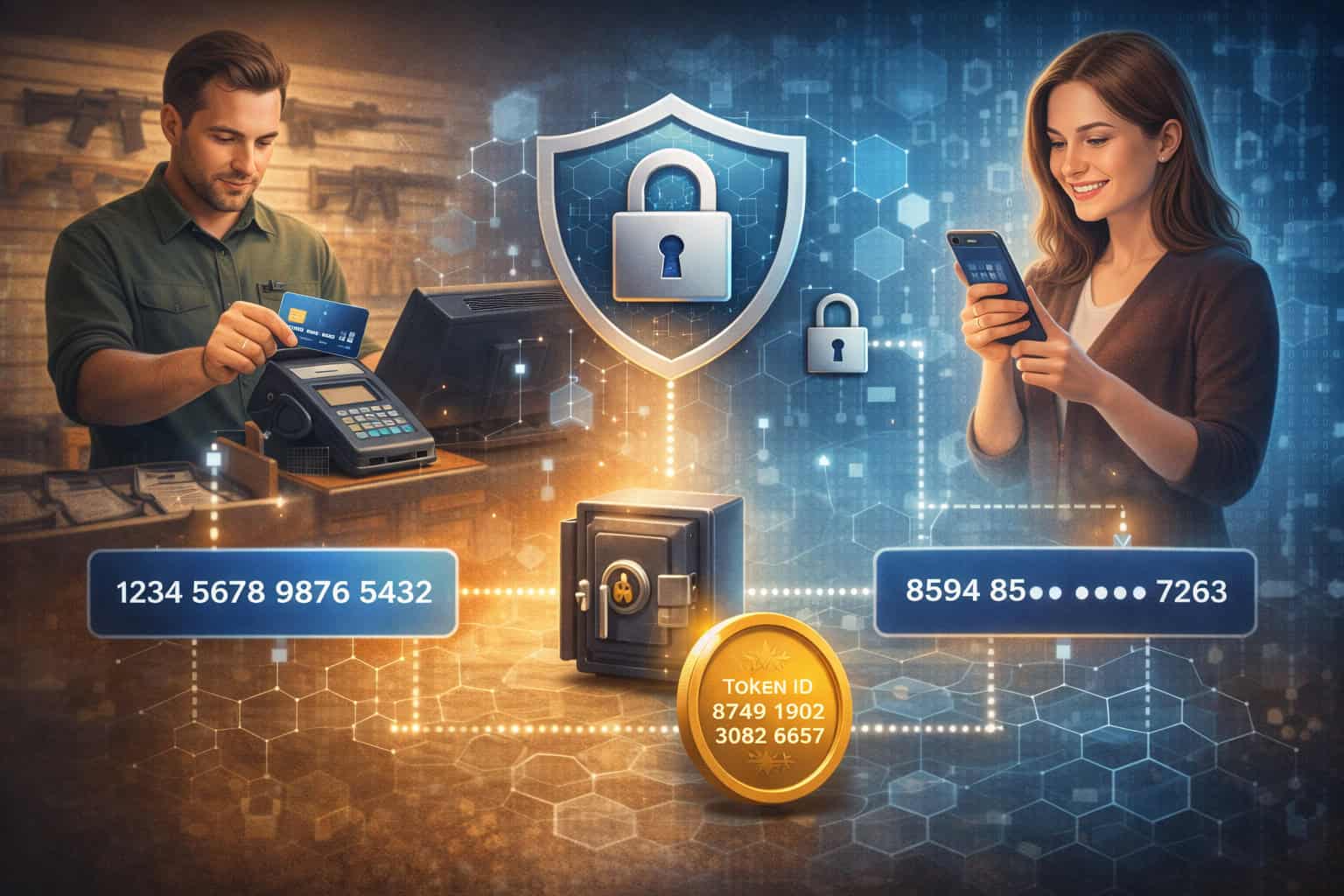
Payment security is no longer a back-office issue that only matters to processors, banks, or IT teams. For high-risk merchants, it is tied directly to approvals, customer trust, operational stability, and long-term growth.
One weak payment workflow can create chargebacks, fraud losses, compliance trouble, or a costly data exposure event that damages the business far beyond a single transaction.
That is why Payment Tokenization for High-Risk Businesses matters so much. It helps merchants reduce their exposure to sensitive card data while still making it easier to support recurring billing, saved payment methods, refunds, phone orders, subscriptions, and other everyday payment activities.
Instead of letting raw card information move through too many systems, tokenization replaces that sensitive data with a substitute value that is far less useful to attackers.
For business owners and decision-makers in high-risk industries, tokenization is not just a technical add-on. It is part of building a safer payment environment. It can support better payment data security, stronger customer payment protection, improved merchant account security, and a more resilient payment operation overall.
This article explains how tokenization works, why it matters more in high-risk environments, how it fits with broader payment processing compliance, and what to look for when choosing a provider. It also covers real-world examples, common mistakes, and a practical implementation checklist so you can move from theory to action.
What Payment Tokenization for High-Risk Businesses Really Means
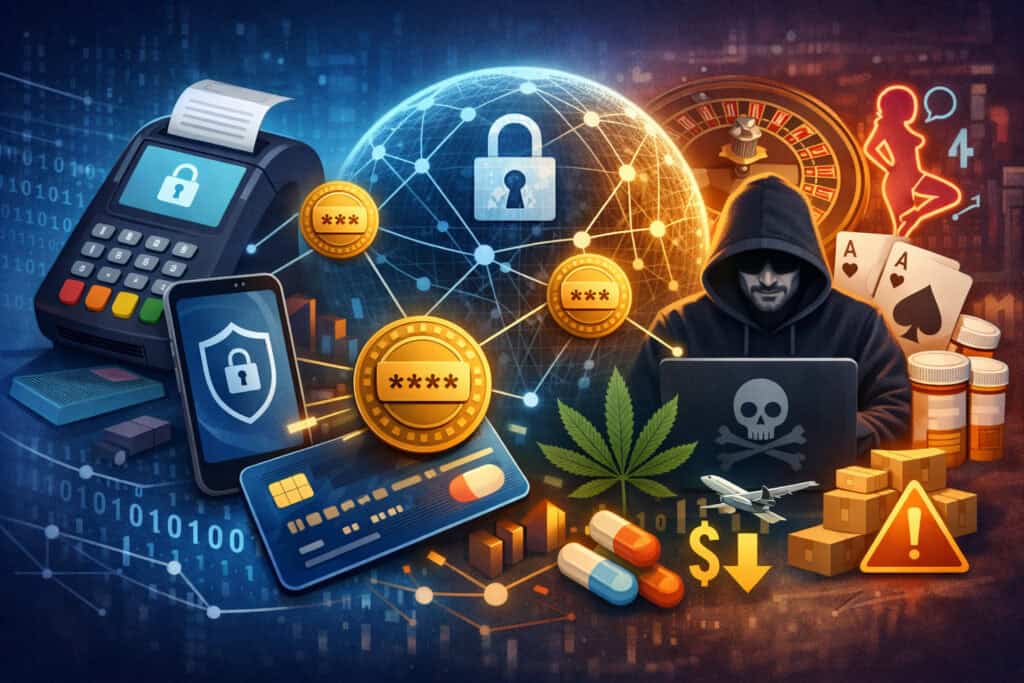
At its core, Payment Tokenization for High-Risk Businesses means replacing sensitive card details with a non-sensitive value called a token. That token can then be stored or used in approved payment workflows without exposing the actual card number each time a transaction is processed.
The real card data is typically stored inside a protected token vault managed by a payment provider or gateway, while the merchant interacts with the token instead of the raw card data.
This matters because high-risk businesses often face more complex payment scenarios than low-risk merchants. They may process larger average tickets, deal with more refunds, support recurring charges, handle remote orders, or operate in industries where fraud attempts and chargeback pressure are higher. In those settings, reducing direct contact with sensitive payment data is a major advantage.
Tokenization does not stop a transaction from happening. It changes how the payment data is handled during and after the transaction. A business can still offer card-on-file billing, subscription payments, or customer account updates. The difference is that it does so with tokenized references rather than storing raw account details internally.
This is why Tokenization in Payment Processing has become such an important part of modern secure payment infrastructure. It helps limit unnecessary data exposure across systems, users, software tools, and workflows. The less raw card data your business touches, the fewer places that data can be compromised.
For high-risk merchants, that creates meaningful business value. It supports:
- Better cardholder data protection
- Lower exposure during breaches
- Safer recurring billing workflows
- Stronger internal payment controls
- Improved customer confidence during checkout
A business owner does not need to understand every technical layer to benefit from tokenization. What matters is knowing that tokenization reduces the amount of real card data flowing through your environment and helps create safer, more manageable payment operations.
Why the “High-Risk” Part Changes the Conversation
High-risk merchants do not face the same payment environment as every other business. Their challenges are often sharper, more frequent, and more expensive when something goes wrong. That is why tokenization is not just helpful in these industries. In many cases, it becomes a core defensive layer.
A high-risk business may deal with elevated fraud attempts, more card-not-present fraud, higher dispute volumes, subscription-related billing complexity, manual order workflows, or stricter underwriting scrutiny.
In these environments, raw card data becomes a bigger liability because there are often more payment touchpoints and more chances for something to go wrong. The more places card information appears, the more opportunities attackers, bad actors, or simple internal mistakes have to expose it.
Tokenization helps shrink that exposure. It gives merchants a way to keep payment operations moving without leaving actual card details scattered across CRMs, invoicing tools, internal notes, recurring billing systems, or support workflows. That matters especially when teams need to manage customer accounts over time.
It also matters during provider reviews and risk evaluations. Businesses that use stronger transaction security tools and better secure checkout systems may be in a better position to demonstrate that they take security seriously.
Tokenization alone will not solve all risk issues, but it can strengthen the overall security posture of a merchant account environment.
Why Tokenization Is About More Than Technology
It is easy to think of tokenization as a technical feature living inside a gateway or payment platform. In reality, it is also an operational and trust-building tool. It affects how teams work, how customers experience checkout, and how a business reduces avoidable risk over time.
When a business uses Secure Payment Tokenization, staff members no longer need to rely on insecure workarounds to manage repeat payments or saved cards. Support teams can process approved customer requests without seeing full card details.
Accounting teams can issue refunds through secure references. Subscription systems can rebill customers using tokens rather than stored raw account numbers.
That creates fewer risky habits inside the business. It also reduces the temptation to keep sensitive data in spreadsheets, emails, chat threads, written notes, or disconnected software tools. In many real-world cases, those weak operational habits are what create the biggest exposure.
From the customer side, tokenization supports smoother payment experiences. Customers want convenience, but they also want confidence.
Being able to save a payment method, update billing details securely, and make future purchases without re-entering a card each time improves usability while also supporting better digital payment security.
So while tokenization is technical under the hood, the real benefit is practical. It helps businesses run safer payment operations without adding unnecessary friction for customers or staff.
Why High-Risk Businesses Face Greater Payment Security Challenges
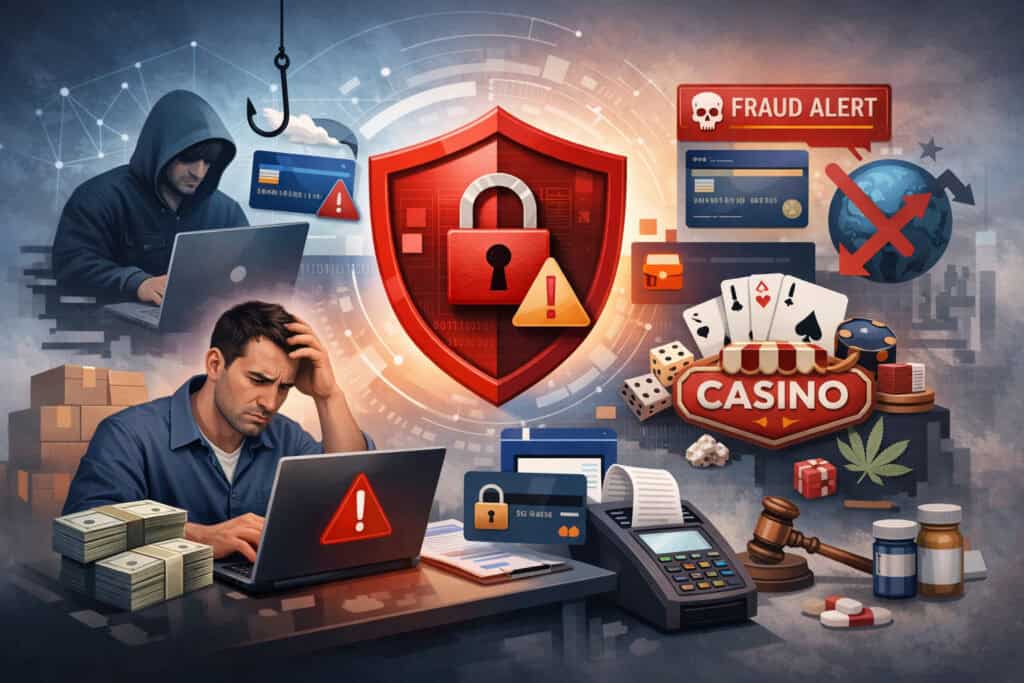
High-risk businesses are under more pressure because payment problems tend to hit them harder and faster. A low-risk merchant might absorb an occasional fraud event or operational mistake without major fallout.
A high-risk merchant often cannot. Fraud spikes, data exposure incidents, or weak billing controls can lead to lost revenue, customer churn, processor scrutiny, rising reserves, or even account instability.
That is why high-risk merchant security requires more than a basic checkout page. It requires layered controls that protect the business across the full payment lifecycle.
This includes checkout, authorization, storage, recurring billing, refunds, support activity, account updates, and back-office access. Tokenization matters because it reduces how often raw payment data touches those layers.
Many high-risk merchants also rely more heavily on remote transactions. That means less face-to-face verification and more dependence on online forms, payment gateways, virtual terminals, invoices, and customer support interactions.
Every remote touchpoint increases the importance of payment gateway security, secure card storage, and data breach prevention.
Fraud is only part of the issue. Internal handling practices can be just as dangerous. A business might collect payment details properly at checkout, then create risk later by copying card information into another tool for subscriptions, support requests, or manual billing.
This is one of the biggest reasons tokenization is so valuable. It helps businesses continue those workflows without spreading raw card data around the organization.
In high-risk environments, payment security also affects business reputation. Customers may already be cautious when buying from unfamiliar merchants, especially in industries where transaction amounts are large or ongoing billing is involved. A business that can offer safer, more professional payment experiences is better positioned to build trust.
The Cost of Sensitive Payment Data Exposure
Raw card data is dangerous to store carelessly because it creates concentrated risk. If attackers access it, they do not need to decode a business process or reverse-engineer a complex system.
They can go straight for what matters most: usable payment credentials. Even when a breach starts small, the fallout can spread quickly across customers, operations, brand trust, and compliance obligations.
For a high-risk business, the consequences of exposing cardholder data may include:
- Fraud-related losses
- Customer complaints and cancellations
- Dispute increases
- Remediation costs
- Payment provider scrutiny
- Audit or compliance pressure
- Reputational damage that lingers long after the incident
This is where Credit Card Tokenization Security becomes so valuable. When businesses rely on tokens instead of keeping real card numbers in multiple systems, a stolen database or compromised internal tool may contain far less useful information. That does not mean the business is invulnerable, but it can significantly reduce the severity of an incident.
Businesses sometimes underestimate how widely payment data spreads once daily operations begin. A single card might pass through a checkout page, billing platform, CRM note, support case, accounting workflow, or refund process. Without strong controls, this creates a messy and risky trail.
Tokenization helps clean up that trail. It keeps payment workflows functional while minimizing direct exposure to actual card details.
Why Fraud Pressure Is Higher in High-Risk Payment Environments
Fraudsters do not target businesses randomly. They tend to look for situations where the payoff is higher and the controls are weaker. High-risk payment environments can attract more attention because they may involve remote sales, larger purchases, subscription models, fast-moving customer acquisition, or complex fulfillment timelines.
In many cases, the fraud risk is not limited to one transaction type. It can appear in first-time online orders, stored card abuse, fraudulent refunds, account takeover attempts, manipulated recurring billing, or phone-based social engineering.
That means businesses need security measures that protect not just the front-end checkout experience, but the full lifecycle of a payment relationship.
Tokenization for High-Risk Payment Processing helps reduce one major area of exposure: repeated handling of raw card information. If a business must process future charges, refunds, upgrades, or renewals, tokens allow those tasks to happen without reintroducing full card details to staff or internal systems.
That reduces the chance that fraudsters can obtain valuable card data through breached databases or compromised workflows.
It also supports safer customer account management. When customers return, update billing preferences, or change plans, the system can often work with tokens and vault references instead of requiring the business to store or re-collect the original card number in risky ways.
How Tokenization in Payment Processing Works Step by Step
Many business owners hear the term tokenization but never get a simple explanation of what actually happens. The good news is that the concept is easier to understand than it sounds. Tokenization in Payment Processing replaces sensitive card data with a placeholder value that stands in for the original information during approved workflows.
The token itself is not the card number. It is a substitute created by a payment provider, gateway, or vault system. The real card data is stored securely in a protected environment, while the business uses the token for tasks such as recurring billing, saved payment methods, refunds, or customer account management.
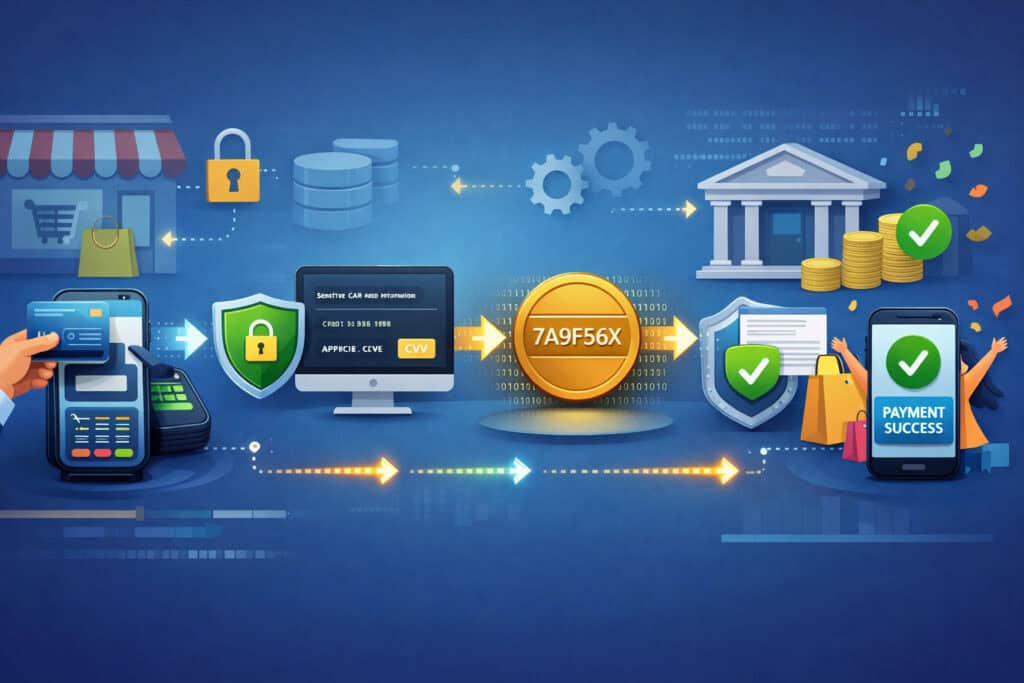
Here is what a typical tokenized payment flow looks like:
- A customer enters card information on a secure checkout form or hosted payment page
- The payment system receives the card data in a protected environment
- The system creates a token linked to that card data
- The real card number is stored in a secure token vault
- The merchant system stores or uses the token instead of the raw card details
- Future transactions can be processed through the tokenized reference, depending on permissions and setup
This process reduces unnecessary exposure because the merchant’s internal systems do not need to keep handling the full card number after the initial collection step. That is especially helpful for recurring billing security, secure card storage, and customer account functions where payment details need to be used again later.
Tokenization also supports better system design. When businesses build workflows around tokens from the start, they reduce the chance that raw card data ends up in the wrong places. That creates a cleaner, safer payment environment and can make internal controls easier to manage.
What Happens During the Initial Card Capture
The first stage of tokenization is where the card data enters the payment flow. This step matters because the safest tokenization strategy begins by collecting card information in a controlled, secure environment.
In many cases, that means using a hosted payment page, embedded secure payment fields, or a gateway-controlled checkout form rather than collecting raw card data directly into your own systems.
When the customer enters payment details, the secure payment system processes that information and generates a token.
The card data is then stored in a protected token vault or passed through approved payment infrastructure, depending on the provider’s design. From that point forward, the merchant ideally works with the token instead of the original card number.
This setup improves customer payment protection because it reduces how much real card data the merchant’s website, servers, employees, and third-party tools ever see. The merchant still gets the ability to charge the card for approved uses, but the card details are not freely circulating inside the business environment.
The biggest practical advantage is that future payment actions become safer. Whether the business needs to handle renewals, upgrades, one-click reorders, or account-based billing, it can use tokenized values instead of exposing the underlying card data again.
How Tokens Support Future Transactions Safely
The real business value of tokenization often shows up after the first transaction. Many high-risk merchants need to do more than process one-time payments.
They may need to rebill customers, manage subscriptions, issue partial refunds, update plans, split charges, collect balances later, or let customers store payment methods for convenience. That is where tokens become especially useful.
Once the card has been tokenized, the system can reference that stored payment method using the token. The merchant’s software may display the saved payment method in a customer profile, billing screen, or admin panel, but without exposing the actual card number. The token works as a pointer to the stored payment credentials inside the provider’s secure environment.
This is one reason Secure Payment Tokenization is so valuable for long-term customer relationships. It allows a business to support:
- Subscriptions and scheduled billing
- Card-on-file purchases
- Secure customer account management
- Plan upgrades and downgrades
- Refund and rebill workflows
- Invoiced payments tied to saved methods
These conveniences matter to customers, but they are risky if built around raw card storage. Tokenization allows businesses to support convenience and security at the same time.
Tokenization vs Encryption: What Is the Difference?
Businesses often hear about both encryption and tokenization, and many assume they are interchangeable. They are not. Both help protect payment information, but they do different jobs. Understanding encryption vs tokenization is important because high-risk businesses should not treat one as a complete replacement for the other.
Encryption scrambles data into an unreadable format using a cryptographic key. If someone intercepts encrypted data without the key, it should be difficult to read.
However, the underlying data still exists and can be restored through decryption when needed. In other words, encryption protects data by making it unreadable unless someone has authorized access.
Tokenization works differently. It replaces the original sensitive value with a substitute token. The token is not a scrambled version of the card number that can simply be decrypted by the merchant.
Instead, it points back to the card data stored in a secure vault or controlled environment. The merchant uses the token, while the actual card number stays protected elsewhere.
Both approaches are useful, but tokenization is especially strong for reducing data exposure in day-to-day payment operations. If your systems do not need the raw card number to function, tokenization helps keep it out of reach. That is why it plays such a major role in payment data security and high-risk merchant security.
Encryption protects data in transit or storage. Tokenization reduces where sensitive data lives and where it can spread. In practice, strong payment systems often use both.
Why Tokenization Often Feels More Practical for Merchants
For many business owners, tokenization is easier to appreciate because its business benefit is so direct. The merchant does not need to store or repeatedly handle actual card numbers to support future billing activity. That means less exposure across websites, software platforms, internal staff processes, and support workflows.
Encryption is still important, especially for protecting data as it moves between systems or sits in approved storage locations. But encrypted data is still sensitive data. If a system decrypts it during use, or if the keys are compromised, the underlying card information may still become exposed.
Tokenization changes that equation by limiting the need for the merchant to possess the raw data at all. This is why Credit Card Tokenization Security is often more useful from an operational standpoint.
It supports common merchant needs like stored cards, recurring billing, and customer account updates without turning every internal system into a storage point for cardholder data.
For high-risk businesses, that is a big deal. Practical security is the kind that reduces risk during real workflows, not just in theory. Tokenization is powerful because it fits how businesses actually operate.
Why the Best Payment Security Strategy Uses Both
It is a mistake to frame tokenization and encryption as an either-or choice. Strong payment environments usually rely on both because they solve different parts of the problem.
Encryption helps protect sensitive data while it is being transmitted or stored in approved systems. Tokenization helps reduce the merchant’s need to keep or use that sensitive data directly.
Together, they support stronger payment fraud prevention and data breach prevention. For example, a secure checkout system may use encryption while card data is submitted, then tokenize the card immediately so the merchant stores only the token afterward.
That layered approach limits exposure and protects the data across multiple stages of the payment lifecycle.
For business owners, the key lesson is simple: tokenization is not “better than encryption” in every sense. It is better at reducing merchant-side exposure to card data in everyday operations.
Encryption remains valuable, but tokenization is often what makes secure recurring billing, saved cards, and safe customer account workflows possible at scale.
How Secure Payment Tokenization Reduces Exposure to Sensitive Card Data
The biggest strength of Secure Payment Tokenization is that it shrinks the number of places where real card information exists inside your payment environment. That alone can make a major difference for high-risk businesses. Every extra copy of cardholder data creates another possible breach point, compliance concern, or operational weakness.
Without tokenization, card details may end up flowing through websites, internal billing systems, customer service workflows, CRM notes, spreadsheets, invoicing tools, or staff communications.
Sometimes that happens because the business designed the process poorly. Other times it happens because the original system did not support safer alternatives. Either way, raw payment data spreads farther than it should.
Tokenization helps stop that spread. It allows businesses to create payment workflows that depend on a stored token rather than the full card number.
The token can support future uses such as rebilling, subscription renewals, customer profile management, or refunds, all without exposing the actual card data to users or systems that do not need it.
This reduced exposure supports several important goals:
- Better cardholder data protection
- Lower breach impact if a system is compromised
- Safer payment operations for internal teams
- Cleaner separation between billing activity and raw payment data
- Stronger control over who can access what
For high-risk businesses, these benefits are not theoretical. They affect real workflows every day. If your staff can perform approved billing tasks without ever viewing or storing full card numbers, you reduce both accidental risk and malicious risk.
Why Less Data Exposure Usually Means Lower Business Risk
There is a simple security principle that matters here: the less sensitive data you keep, the less sensitive data can be stolen, mishandled, or leaked. This does not mean tokenization removes risk entirely, but it can materially lower the blast radius of a payment security problem.
Imagine two businesses. One stores full card numbers across several internal systems to manage repeat charges and customer accounts. The other stores only tokens, with actual card data isolated in a secure provider-controlled vault.
If both businesses suffer a software compromise, the second business is likely in a much better position because its exposed systems contain far less directly usable card data.
That is why Tokenization for High-Risk Payment Processing is so important. High-risk merchants often have more complicated billing relationships and more reasons to interact with stored payment methods after checkout. Tokenization lets them do that without treating raw card data as an everyday business asset.
Less exposure also makes security reviews easier to manage. It is easier to understand and secure an environment where real card data is tightly contained than one where that data passes through multiple systems and teams.
How Tokenization Supports Safer Internal Workflows
A business can have a secure checkout page and still create risk afterward if internal processes are weak. That is a common blind spot. Many payment incidents happen not because the initial transaction was unsafe, but because the business mishandled card data later during customer support, renewals, manual rebills, or reporting.
Tokenization helps by giving teams a safer way to work. Support staff can locate a customer’s saved payment method without seeing the full card number.
Billing teams can run an authorized recurring charge or send an invoice tied to a secure payment method. Finance teams can process certain refund workflows through token-linked transaction histories. That reduces the need for staff to request, record, or store card details manually.
This is one of the most practical benefits of tokenization. It supports stronger security without forcing a business to abandon efficient customer service or flexible billing models. When done correctly, it also reduces staff training risk because employees are less likely to encounter full card details during routine work.
How Credit Card Tokenization Security Supports Recurring Billing and Saved Cards
For many high-risk merchants, the real challenge is not the first transaction. It is everything that comes after. Ongoing billing relationships create more chances for both revenue and risk.
Subscriptions, installment plans, membership renewals, follow-up purchases, one-click reorders, and account-based services all require some way to charge a customer again in the future. That is where Credit Card Tokenization Security becomes especially valuable.
Instead of storing raw card numbers internally, the payment system stores a token that represents the card in a secure, approved way.
The business can then use that token for future payment events, assuming the customer permissions and billing rules are set correctly. This allows recurring charges to happen without the business exposing or re-collecting full card details each time.
This is a huge operational advantage. It supports recurring billing security while also improving customer convenience. Customers do not want to re-enter payment details for every renewal, plan update, or balance payment. At the same time, they expect their information to be protected. Tokenization helps meet both expectations.
It also supports better account management. When a customer logs in to view billing history, update preferences, change plans, or maintain a saved payment method, the platform can reference tokenized data rather than exposing real card information. That creates a safer customer experience and a cleaner internal workflow.
Safer Subscriptions, Renewals, and Card-on-File Payments
Subscription and card-on-file business models create predictable revenue, but they also create ongoing storage and billing responsibilities. A merchant that wants to rebill customers every month or charge for future services needs a secure way to reference stored payment credentials.
Without tokenization, some businesses fall into dangerous habits like storing full card data in internal systems or relying on staff to re-collect payment details manually.
Tokenization gives these businesses a safer alternative. Once the card is captured securely and tokenized, future charges can be processed using the token rather than the raw card number. That reduces exposure while making the billing process smoother and more scalable.
This is especially useful for:
- Subscription billing
- Automated renewals
- Installment payments
- Delayed capture or balance collection
- Customer-authorized card-on-file transactions
It also reduces the operational friction of expired cards, customer account maintenance, and repeat purchases. Many payment providers pair tokenization with account updater tools or vault services that help keep stored payment methods usable over time, which further improves convenience and continuity.
Better Refunds, Support Workflows, and Customer Account Management
Stored payment methods affect more than recurring billing. They also influence refunds, support requests, account edits, and post-sale customer experience. In a high-risk business, these areas can quickly become messy if staff must rely on manual processes or raw payment details to resolve simple issues.
Tokenization helps create cleaner, safer workflows. A support team can locate a transaction tied to a tokenized payment method and process an approved refund without needing full card access.
A billing team can update a customer’s subscription arrangement without retyping the original card details into a vulnerable system. A customer can log in and manage payment preferences through a secure account experience that references stored tokens rather than visible card data.
These benefits are easy to overlook, but they matter. Security is not only about stopping breaches. It is also about designing daily operations that reduce unnecessary exposure and human error. Tokenization supports that by making secure payment handling part of the normal workflow instead of a special exception.
How Tokenization Supports Fraud Reduction, Compliance, and Customer Trust
Businesses often adopt tokenization because they want stronger security, but the benefits extend further. Payment Tokenization for High-Risk Businesses can also support better fraud control, a stronger compliance posture, and more trust from customers who are deciding whether to complete a transaction.
Fraud reduction starts with limiting valuable data exposure. When attackers cannot easily access raw card information from merchant systems, one common target becomes less attractive.
Tokenization does not stop every kind of fraud, but it does reduce the risk that payment credentials will be widely exposed across your systems and workflows. That is an important part of payment fraud prevention, especially for merchants that store cards or manage repeat billing.
Compliance is another major area. Businesses that reduce their handling of cardholder data may be able to simplify parts of their payment processing compliance responsibilities, depending on how the environment is designed.
Tokenization does not remove all obligations, but it can support a more controlled security model by reducing where sensitive data exists and which systems interact with it.
Customer trust may be the most overlooked benefit. Customers are more likely to complete purchases and maintain ongoing billing relationships when the payment experience feels secure, modern, and professional.
Features like hosted payment pages, secure saved cards, and well-designed account management tools signal that the business takes payment protection seriously.
Why Tokenization Helps but Does Not Guarantee Compliance
One of the biggest misconceptions in payments is that tokenization alone makes a business fully compliant. That is not true. Tokenization is a strong security control, but compliance depends on the full payment environment, including how card data is captured, transmitted, stored, accessed, and managed.
A business may reduce scope and exposure by using tokenization, especially when combined with hosted payment pages or provider-controlled secure fields. But if the business still handles raw card data elsewhere, uses unsafe integrations, or allows insecure internal workflows, tokenization will not erase those issues.
This is why PCI compliance discussions need nuance. Tokenization can help support compliance efforts by limiting card data exposure and reducing merchant-side storage.
However, businesses still need to review how their systems are configured, how staff interact with payment workflows, and what other controls are in place.
In practical terms, tokenization should be seen as a major compliance-supporting tool, not a compliance shortcut.
Why Customers Care More About Payment Protection Than Ever
Customers may not always know the word tokenization, but they understand the value of secure payments. They want confidence that their payment details are protected, especially when making larger purchases, enrolling in recurring billing, or storing a card for future use.
A business that uses secure checkout systems, professional payment flows, and safer account management experiences sends a stronger signal of credibility.
That matters even more in high-risk industries, where customers may already have more questions before buying. If the payment experience feels disorganized or outdated, trust can drop quickly.
Tokenization supports customer trust in several practical ways:
- Safer saved payment methods
- Reduced need to repeat card entry
- More secure recurring billing experiences
- Better account management for stored cards
- Lower likelihood of careless internal handling
Trust is built through visible experience and invisible infrastructure. Customers notice the experience. Tokenization strengthens the infrastructure behind it.
How Tokenization Connects to Gateways, Hosted Payment Pages, Vaulting, and Checkout Flows
Tokenization does not exist on its own. It is usually part of a larger payment ecosystem that includes gateways, hosted forms, token vaults, and checkout architecture. To get the full benefit of Tokenization in Payment Processing, businesses need to understand how these pieces work together.
The payment gateway is often the system that securely routes transaction data and supports token generation. A hosted payment page or embedded secure fields may be the mechanism that captures the card details without exposing them directly to the merchant’s systems.
The token vault is the protected storage environment where the actual card data is held and linked to the issued token. The checkout flow determines how smoothly and safely the customer moves through the payment process.
These pieces matter because tokenization works best when the initial card capture is designed securely. If a business collects card data directly in an unsafe way before tokenizing it later, much of the risk reduction is lost.
By contrast, when the provider handles secure capture from the beginning, the merchant can often avoid touching raw card data altogether.
This is also where payment gateway security and secure payment infrastructure become important. A token is only as useful as the system behind it. Businesses need to know where the data goes, who stores it, how it is protected, and how future charges are authorized.
What a Token Vault Does and Why It Matters
A token vault is the secure environment where the real card data is stored after tokenization. The merchant does not rely on the card number directly. Instead, the business uses the token, while the vault manages the protected relationship between the token and the actual payment credentials.
This setup is critical because it isolates the most sensitive data. Rather than leaving card details inside multiple merchant systems, the vault centralizes them in a more controlled environment. That helps with secure card storage, access control, and breach impact reduction.
When evaluating tokenization solutions, businesses should ask where the vault is managed, how access is controlled, and what happens if they ever change providers.
Some token systems are deeply tied to a single gateway, which may affect future portability. Others offer more flexibility. The right answer depends on your business model, but the question should always be asked.
Vault quality matters as much as token availability. A token is helpful only if the vault behind it is secure, reliable, and well integrated into your payment operations.
How Hosted Payment Pages and Secure Fields Reduce Scope
Hosted payment pages and secure embedded payment fields are often among the smartest ways to pair tokenization with lower merchant-side risk.
Instead of collecting card details directly into your own systems, you let the payment provider’s controlled environment handle the sensitive data capture. The provider can then tokenize the card and return a token or transaction reference for future use.
This approach supports stronger secure checkout systems because the merchant does not need to handle raw card information during the most sensitive step. It also helps support a cleaner PCI compliance posture because fewer merchant systems are directly involved with card capture.
For high-risk businesses, this can be a major advantage. It reduces the chance that developers, plugins, internal applications, or third-party tools accidentally expose payment information. It also helps standardize the checkout process in a way that is easier to secure over time.
Practical Use Cases for Tokenized Payments in High-Risk Businesses
Tokenization becomes much easier to understand when viewed through real business scenarios. High-risk merchants often need flexible payment operations, and those operations create exactly the kinds of situations where tokenized payments are most valuable.
From online sales to phone orders, invoicing, repeat billing, and larger-ticket transactions, tokenization helps merchants keep things secure without making the customer experience difficult.
The main goal is not to remove functionality. It is to support common payment activities without spreading sensitive card data through the business. That is why Payment Tokenization for High-Risk Businesses is so practical. It helps businesses keep revenue workflows efficient while reducing exposure.
Consider how many times a business may need to interact with a customer’s payment method after the initial checkout.
A customer may save a card for future use, split a large purchase into multiple payments, request a subscription plan change, authorize a delayed charge, call in to update billing details, or pay from an invoice link. Without tokenization, those activities often create extra handling risk.
With a tokenized model, those same actions can be managed through secure references and controlled payment tools.
Online Payments, Phone Orders, and Invoice-Based Billing
Online payments are one of the most common uses for tokenization. A customer enters their card into a secure checkout form, the system tokenizes the card, and the merchant can use the token later for approved actions such as follow-up charges, subscriptions, or customer-authorized future purchases. This supports both convenience and stronger digital payment security.
Phone orders are another area where tokenization matters. Businesses that accept card details over the phone need to be especially careful because manual handling creates serious risk.
A safer setup may involve a secure virtual terminal, provider-controlled payment capture, or a payment link sent to the customer. Once the card is tokenized, staff can manage future billing needs without writing down or storing full card details.
Invoicing also becomes safer with tokenization. A business can send an invoice linked to a secure payment page, then store a token for future approved billing if needed. That is much better than collecting card details through email, chat, or informal channels.
Recurring Transactions and High-Ticket Purchases
Recurring transactions are one of the clearest examples of tokenization in action. Whether the billing cycle is weekly, monthly, or based on milestones, the merchant needs a reliable way to charge the payment method again. Tokens make that possible without requiring raw card storage in the merchant environment.
High-ticket purchases also benefit from tokenization, especially when payments are split into stages or completed over time. A customer may authorize an initial deposit and later balance collection. A tokenized payment method allows the business to manage those later charges more securely and with better operational control.
This matters because higher transaction values often attract more scrutiny from processors and more attention from fraudsters. Businesses handling larger purchases should not rely on insecure manual methods to store or reuse payment information.
Tokenization gives them a safer alternative that supports structured billing workflows and stronger transaction security tools.
Common Misconceptions About Tokenization
Tokenization is powerful, but it is also widely misunderstood. Some businesses assume it is a complete security solution on its own. Others believe that if they have tokenization, they no longer need to think about compliance, staff access, gateway setup, or fraud controls. These misconceptions can create dangerous blind spots.
One common misunderstanding is that tokenization means no one can ever misuse a stored payment method.
That is not true. If an attacker gains access to systems that can trigger transactions through the token, damage may still occur even without seeing the full card number. Tokenization reduces direct data exposure, but it does not eliminate the need for access control, transaction monitoring, and approval workflows.
Another misconception is that all tokenization is equal. It is not. The quality of the implementation matters. A strong provider may combine secure capture, vaulting, access control, and clean integrations. A weaker setup may advertise tokenization while still allowing raw card data to pass through merchant systems unnecessarily.
Businesses also sometimes assume tokenization solves all PCI compliance concerns automatically. It can help a lot, but it does not erase poor processes elsewhere in the environment.
Tokenization Does Not Make a Business Immune to Breaches
This is one of the most important points to understand. Tokenization can significantly reduce breach impact, but it does not make a business immune to security incidents. Attackers may still target admin dashboards, customer accounts, invoice systems, weak integrations, or internal users with excessive permissions.
If a business uses tokenization but has weak passwords, poor access control, unsafe plugins, or bad billing processes, the environment is still at risk. The difference is that a compromise may expose less directly usable card data if tokenization is implemented correctly.
That is still a big benefit. Reducing the value of exposed data can reduce customer harm and business fallout. But it should not create false confidence. Smart merchants treat tokenization as one major layer inside a broader security framework.
Tokenization Does Not Replace Good Security Operations
A secure payment setup still needs good operational discipline. Businesses need staff training, role-based access, clean integrations, secure checkout design, logging, fraud review processes, and reliable provider oversight. If those basics are ignored, tokenization will not save the day by itself.
For example, if employees can manually override billing rules without review, or if customer service agents can expose stored payment information carelessly, the business still has a security problem.
Likewise, if card data enters the environment through side channels such as email or chat before tokenization, avoidable exposure remains.
The goal is to combine tokenization with solid process design. Businesses that do this well gain both security and efficiency.
Common Payment Security Mistakes High-Risk Businesses Make
High-risk merchants do not usually create payment risk on purpose. Most problems come from shortcuts, old habits, weak integrations, or assumptions that someone else is handling security. Unfortunately, these mistakes can expose raw card data, create compliance problems, and increase fraud risk quickly.
One of the most common errors is storing full card details in places that were never designed for that purpose. This may include spreadsheets, CRM notes, support tickets, email threads, text messages, or shared documents.
Sometimes businesses do this because they want convenience for future billing. Other times, it happens because staff members were never given a safer workflow. Either way, it is dangerous.
Another frequent mistake is relying on tokenization features without understanding how the integration actually works. A business may think it is using tokenized payments, but raw card data may still be passing through parts of the merchant environment first. That weakens the protection significantly.
Some businesses also misunderstand token vaults. They assume the existence of a vault means all payment data handling is secure, even though their internal processes still expose sensitive details in other systems.
Weak Integrations and Unsafe Internal Workflows
Payment security is often strongest at the gateway level and weakest in the way merchants connect that gateway to the rest of their business systems. A weak integration can undo much of the value of Secure Payment Tokenization if raw card data is captured, logged, or copied before tokenization takes place.
Unsafe internal workflows create similar problems. Staff may ask customers to send card details through insecure channels. Teams may copy payment data into internal systems for later use. Admin users may have broad permissions they do not actually need. These behaviors create silent risk that grows over time.
Businesses should be especially cautious with:
- Custom checkout implementations
- Old plugins or unverified third-party tools
- CRM fields used for billing notes
- Email-based payment collection
- Shared inboxes handling payment updates
- Virtual terminals with too many users
Each of these areas deserves review if your business handles repeat billing or remote payments.
Overlooking the Bigger Security Picture
A business can adopt tokenization and still leave itself exposed if broader controls are weak. For example, account takeover risk, refund abuse, poor user permissions, insecure APIs, and weak login security can all create payment problems even when stored card data is tokenized.
That is why merchant account security must be broader than storage protection alone. Businesses also need to think about:
- User access control
- Fraud screening
- Customer account security
- Admin authentication
- Software update discipline
- Incident response planning
Tokenization supports the bigger picture, but it does not replace it. Strong payment security comes from layering the right controls around the most sensitive workflows.
How to Evaluate Payment Providers That Offer Tokenization Features
Not all tokenization solutions are equally strong, and not all providers explain them clearly. For high-risk merchants, choosing the right payment provider is not just about finding a company that says it offers tokens. It is about understanding how tokenization fits into the full payment environment and whether the provider’s tools match your business model.
Start by asking where card data is captured. A strong setup often uses hosted payment pages, secure fields, or gateway-controlled components that keep raw card data outside your systems as much as possible. Then ask where the real card data is stored and how the token vault is managed. If a provider cannot explain that clearly, that is a concern.
Next, ask how tokens work in actual merchant workflows. Can they support subscriptions, invoices, phone payments, refunds, account updates, and card-on-file transactions? Are they tied only to one platform, or is there some flexibility? Does the provider support useful admin controls around access and permissions?
For Tokenization for High-Risk Payment Processing, provider quality matters because high-risk merchants usually need more than a one-time checkout feature. They need a durable, operational payment system that can handle recurring revenue, customer support, fraud pressure, and compliance expectations.
Questions to Ask Before You Commit
A provider may advertise tokenization, but you need specifics. Decision-makers should ask practical questions that reveal whether the system is truly secure and usable.
Important questions include:
- Does card data ever touch our servers or application directly?
- Is the tokenization tied to hosted fields, a hosted payment page, or a direct integration?
- Where is the token vault managed?
- Can tokens be used for subscriptions, refunds, stored cards, and customer account changes?
- What staff roles can access payment functions?
- How does the system support PCI compliance?
- What fraud controls are available alongside tokenization?
- What happens if we migrate to another platform later?
These questions help separate real secure payment infrastructure from marketing language.
What Strong Tokenization Support Looks Like
A strong provider usually offers more than token creation. It should support a full payment ecosystem that helps reduce risk throughout the transaction lifecycle. This often includes secure capture tools, provider-managed vaulting, access controls, admin visibility, recurring billing support, customer account tools, and integration guidance.
Strong providers also explain limitations honestly. They do not pretend tokenization solves everything. Instead, they show how it fits into broader payment gateway security, compliance workflows, and fraud control.
Look for providers that understand high-risk operational needs. That includes flexible billing support, secure card-on-file capabilities, reliable reporting, and practical tools for customer service and account management. The best tokenization solution is one that your team can use safely and consistently without workarounds.
A Step-by-Step Checklist for Implementing Tokenization Effectively
Implementing tokenization well requires more than turning on a feature. Businesses need to align people, systems, workflows, and provider tools so that tokenization actually reduces exposure. The goal is not simply to “have tokenization.” The goal is to build a safer payment environment around it.
A strong implementation begins with visibility. Before making changes, identify where payment data currently enters your business, where it is stored, who can access it, and which workflows depend on repeat card use. Many merchants are surprised by how much sensitive data exposure exists outside the main checkout process.
Once you understand the current state, you can redesign workflows around secure capture and token use. That may involve shifting to hosted payment pages, enabling secure fields, updating recurring billing systems, limiting internal access, and removing old storage practices that are no longer acceptable.
This matters for both new and established high-risk merchants. New businesses can build safer systems from the start. Established businesses can reduce legacy risk and improve long-term stability.
Implementation Checklist for High-Risk Payment Environments
Use this checklist to guide your rollout:
- Map every payment touchpoint in your business
- Identify where raw card data is currently captured, stored, or shared
- Choose a provider with strong tokenization, vaulting, and gateway controls
- Use hosted payment pages or secure fields where possible
- Replace raw card storage with token-based workflows
- Update recurring billing and card-on-file systems to use tokens only
- Restrict user access to payment functions based on role
- Remove insecure practices such as card details in notes, email, or spreadsheets
- Review integrations to confirm card data is not passing through unsafe systems
- Train staff on approved billing and support workflows
- Document how tokenization supports your compliance and security process
- Monitor payment activity, admin access, and exceptions regularly
This kind of methodical rollout helps ensure tokenization delivers real risk reduction instead of just becoming another feature sitting in the background.
What to Review After Implementation
Once tokenization is live, the work is not finished. Businesses should review how the system is actually being used.
Are staff following the new process? Are old manual habits still happening in customer support? Are tokens being used consistently across recurring billing, invoicing, and stored card functions? Are there still places where raw card data appears unexpectedly?
Ongoing review should include:
- User permission audits
- Billing workflow checks
- Support team process reviews
- Integration testing
- Checkout and invoice flow monitoring
- Exception reporting for unusual payment handling
Tokenization delivers the most value when the full organization uses it correctly. That requires follow-through, not just setup.
The Long-Term Business Value of Tokenization for High-Risk Merchants
The most immediate value of tokenization is security, but the long-term value goes further. Over time, Payment Tokenization for High-Risk Businesses can improve operational efficiency, customer retention, internal consistency, and the overall resilience of the payment environment.
Businesses that rely on tokenized payments often find it easier to manage repeat billing, stored payment methods, account updates, and support workflows in a more structured way. Teams spend less time chasing payment details, cleaning up insecure records, or relying on manual workarounds. That can improve both productivity and professionalism.
Customers benefit too. Safer card-on-file experiences, smoother renewals, and cleaner account management can reduce friction in the buying process. When customers trust the payment experience, they are more likely to complete purchases, stay enrolled in recurring billing, and feel comfortable using saved payment methods again.
There is also a strategic advantage. High-risk merchants often operate under greater scrutiny from providers and face more pressure to show they take payment data security seriously.
A strong tokenization setup helps demonstrate that the business is investing in safer infrastructure rather than taking shortcuts with sensitive payment data.
Why New and Established Businesses Both Benefit
New high-risk businesses benefit because they can avoid building risky habits into their operations. Starting with tokenized workflows helps create a cleaner foundation for subscriptions, invoices, customer accounts, and future growth. It is always easier to build secure processes early than to clean up weak ones later.
Established businesses benefit because tokenization helps reduce legacy risk. Many older payment environments were built around convenience rather than security. Over time, that often results in scattered card data, manual billing workarounds, and compliance uncertainty. Tokenization gives these businesses a path to modernize.
In both cases, the payoff is not just lower exposure. It is better business discipline around one of the most sensitive parts of the customer relationship: payment handling.
Why Tokenization Is Becoming a Core Part of Secure Payment Infrastructure
As payment environments become more digital, remote, and account-based, tokenization is becoming a standard part of responsible payment design. Businesses need to support speed and convenience, but they also need stronger customer payment protection and transaction security tools.
Tokenization fits that need because it reduces direct handling of sensitive payment data while still supporting the workflows modern businesses depend on. It is not a trend feature. It is part of building a more durable, scalable payment operation.
For high-risk merchants, that matters even more. When margins are affected by fraud, disputes, account reviews, and operational complexity, reducing preventable payment risk is a smart long-term move.
FAQ
Q.1: What is Payment Tokenization for High-Risk Businesses?
Answer: Payment Tokenization for High-Risk Businesses is the process of replacing sensitive card data with a token so the business can support payment workflows without storing or repeatedly handling the actual card number.
It is especially useful for merchants that manage recurring billing, saved cards, remote payments, or higher-risk transaction activity.
Q.2: How does tokenization improve payment security?
Answer: Tokenization improves security by reducing how many systems, users, and workflows are exposed to real card data. Instead of storing raw card details across the business, the merchant uses a token while the actual payment data is stored in a secure vault or protected provider environment.
Q.3: Is tokenization the same as encryption?
Answer: No. Encryption scrambles data so it can be unreadable without a key. Tokenization replaces sensitive data with a substitute value that stands in for the original. In payments, both can be useful, but tokenization is especially valuable for reducing merchant-side exposure to cardholder data.
Q.4: Does tokenization make a business fully compliant?
Answer: No. Tokenization can support PCI compliance and reduce payment data exposure, but it does not automatically make a business fully compliant. Compliance depends on the entire payment environment, including data capture methods, integrations, access controls, and internal workflows.
Q.5: Can tokenization help with recurring billing?
Answer: Yes. Tokenization is highly useful for subscriptions, renewals, installment billing, and other card-on-file payment models. It allows future charges to be processed using a token instead of requiring the merchant to store or reuse the full card number directly.
Q.6: Does tokenization prevent all fraud?
Answer: No. Tokenization helps reduce certain risks, especially around stored payment data exposure, but it does not stop all fraud. Businesses still need fraud screening, secure customer accounts, access controls, and broader payment security practices.
Q.7: What should I ask a payment provider about tokenization?
Answer: Ask where card data is captured, whether it touches your systems directly, how the token vault is managed, what workflows tokens support, how staff access is controlled, and how the provider supports compliance and fraud prevention alongside tokenization.
Q.8: Is tokenization useful for phone orders and invoices?
Answer: Yes. Tokenization can make phone payments and invoice-based billing safer by reducing the need to store or repeat full card details manually. When paired with secure payment capture tools, it helps create better protection for both the business and the customer.
Conclusion
For high-risk merchants, payment security is not optional and it is not something to handle halfway. The stakes are too high. Fraud pressure, repeat billing complexity, data exposure risks, and customer trust all come together in the payment environment. That is exactly why Payment Tokenization for High-Risk Businesses matters.
Tokenization helps reduce exposure to sensitive card data by replacing it with tokens that can safely support recurring billing, saved cards, refunds, subscriptions, invoicing, and account management.
It does not remove all risk, and it does not replace broader security controls or compliance responsibilities. But it does make a meaningful difference where it counts most: limiting unnecessary card data exposure across real merchant workflows.
When paired with strong gateways, secure checkout systems, provider-managed vaulting, clean integrations, and disciplined internal processes, tokenization becomes one of the most practical ways to strengthen merchant account security and customer payment protection.
For business owners and decision-makers, the takeaway is clear. If your business handles remote payments, repeat charges, stored cards, or higher-risk transaction patterns, tokenization should not be treated as a nice extra. It should be evaluated as a core part of your payment strategy.