
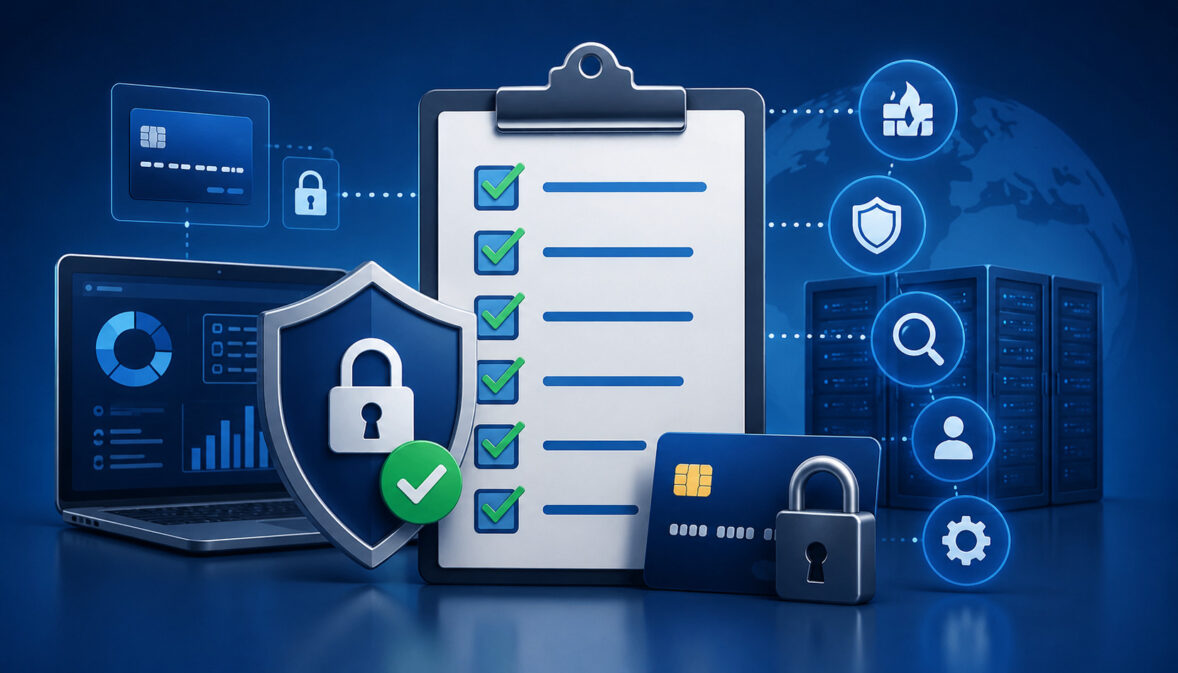
PCI compliance matters because high-risk merchants often handle card-not-present transactions, recurring billing, higher ticket values, refund requests, chargebacks, fraud attempts, and sensitive customer payment data.
A strong PCI compliance checklist for high-risk merchants helps protect cardholder data while supporting account stability, secure checkout, and safer payment workflows.
High-risk merchants are often reviewed more closely by processors, banks, gateways, and fraud teams. That does not mean every high-risk business is unsafe.
It means the business must be able to show that its payment systems, policies, vendors, employees, and customer checkout experience are built around security, fraud prevention, and responsible merchant account compliance.
PCI DSS is not just a technical requirement. It affects how a business accepts payments online, takes payments by phone, stores customer profiles, manages subscriptions, issues refunds, trains employees, and responds to suspicious activity. For a helpful overview of PCI principles, review this PCI compliance resource.
A practical PCI plan should answer several important questions. Where does cardholder data enter the business? Who can access it? Is it encrypted? Is it tokenized? Is the checkout secure? Are employees trained? Are vendors compliant? Are logs reviewed? Are security policies written down?
This guide gives high-risk merchants a structured way to approach PCI compliance for high-risk businesses without overcomplicating the process. It includes a PCI DSS checklist, operational safeguards, payment data protection steps, fraud prevention tips, and secure payment processing compliance for high-risk businesses.
Disclaimer: This article is informational only and is not legal, security, or compliance advice. Merchants should work with qualified PCI professionals, processors, payment gateways, and legal or compliance advisors for requirements specific to their business.
What Is PCI Compliance for High-Risk Merchants?
PCI compliance refers to following the Payment Card Industry Data Security Standard, commonly called PCI DSS. The standard is designed to protect cardholder data whenever a business stores, processes, or transmits payment card information. The PCI Security Standards Council provides official information and resources through its merchant resource center.
For high-risk merchants, PCI compliance is especially important because payment activity may involve elevated fraud exposure, recurring billing, digital transactions, subscription disputes, high refund rates, or greater processor review.
A high-risk classification does not remove the need for PCI compliance. In many cases, it makes documentation and security controls even more important.
PCI compliance for high-risk businesses applies across the full payment environment. That includes ecommerce checkout pages, POS terminals, payment gateways, shopping carts, billing platforms, customer vaults, recurring payment tools, refund portals, virtual terminals, and any workflow where payment data may be entered or handled.
A merchant should understand whether it stores, processes, or transmits cardholder data directly. If it does, the scope of PCI compliance may be larger. If it uses hosted payment pages, tokenization, and compliant third-party tools, the scope may be reduced, but responsibility does not disappear.
High-risk merchant PCI DSS requirements usually include completing the correct self-assessment questionnaire, using secure payment technology, maintaining written policies, restricting employee access, monitoring systems, protecting networks, and working only with validated service providers.
Merchants should also understand how their payment gateway and merchant account provider support compliance.
For merchants evaluating payment tools, resources on high-risk payment gateways can help explain gateway security features such as encryption, fraud screening, and tokenization.
Why High-Risk Merchants Need Strong PCI Controls
High-risk merchants need strong PCI controls because payment security directly affects fraud exposure, processor confidence, customer trust, and merchant account stability.
A weak security environment can lead to unauthorized transactions, data compromise, chargebacks, account reviews, reserves, or even termination of processing privileges.
High-risk businesses are often more exposed to card-not-present fraud. This is especially true for ecommerce, subscription billing, digital delivery, trial offers, travel-related services, regulated products, and other models where customers may dispute transactions after the sale.
Strong PCI controls help reduce opportunities for fraudsters to exploit weak checkout systems or unprotected payment data.
Processor scrutiny is another reason PCI compliance matters. Merchant account providers may request evidence that the business uses secure checkout, protects cardholder data, follows refund policies, and monitors suspicious activity.
A well-maintained PCI DSS checklist can make these conversations smoother because it shows that security is part of daily operations.
Customer trust also depends on payment data protection. Customers expect secure checkout, encrypted payment forms, clear billing descriptors, and safe handling of stored payment profiles. If customers feel uncertain about how their payment information is handled, they may abandon checkout or file disputes after purchase.
Strong PCI controls also support fraud prevention. Encryption protects data in transit. Tokenization reduces the need to store sensitive card details. Access controls prevent unauthorized employees from viewing or misusing payment information. Logging and monitoring help identify suspicious behavior before it becomes a larger issue.
| PCI Checklist Item | Why It Matters | Action Step |
| Use a PCI-compliant payment gateway | Reduces exposure during checkout | Confirm gateway validation and security features |
| Avoid manual card storage | Prevents unnecessary cardholder data risk | Never store card numbers in notes, spreadsheets, email, or paper files |
| Enable encryption | Protects data during transmission | Use secure checkout pages and encrypted payment tools |
| Use tokenization | Reduces stored card data exposure | Store tokens instead of card numbers for recurring billing |
| Restrict employee access | Limits internal misuse and mistakes | Assign role-based permissions |
| Require strong authentication | Protects admin portals and payment systems | Use unique logins and multi-factor authentication where available |
| Monitor transactions | Helps detect fraud patterns | Review suspicious orders, refunds, and chargebacks |
| Maintain written policies | Shows operational discipline | Document payment, refund, access, and incident-response procedures |
Protecting Cardholder Data
Protecting cardholder data starts with minimizing exposure. High-risk merchants should avoid storing full card numbers manually in spreadsheets, emails, shared documents, text messages, screenshots, call notes, or paper forms.
Manual storage is risky because it expands the number of places where sensitive payment data can be lost, copied, misused, or accessed without authorization.
A safer approach is to use secure payment systems that are designed for cardholder data security. Hosted checkout pages, secure payment links, tokenized customer vaults, and compliant recurring billing tools can reduce the amount of card data that touches the merchant’s own systems. This can make PCI compliance easier to manage and improve payment data protection.
Employees should also know what not to do. They should not write card numbers on sticky notes, request full card details over unsecured channels, or save payment data in customer service tickets. A simple rule helps: if a system is not approved for payment data, cardholder data should never be entered there.
Secure Payment Gateways
A secure payment gateway is one of the most important tools in high-risk payment security. Gateways support encrypted payment transmission, tokenization, fraud screening, address verification, card security code checks, velocity controls, and other features that help protect ecommerce checkout.
High-risk merchants should evaluate gateways based on security, reliability, fraud tools, integration quality, recurring billing support, reporting, and compatibility with their shopping cart or billing platform. The cheapest gateway is not always the safest choice. For high-risk merchants, weak fraud controls can become more expensive than gateway fees.
A secure gateway also supports a smoother customer experience. Secure checkout pages should load properly, display trust signals, protect payment forms, and reduce errors. For more context, this guide on payment gateways for high-risk businesses explains common gateway features and risk considerations.
Employee Access Controls
Employee access controls help prevent avoidable payment security problems. Every employee who uses payment systems should have a unique login. Shared usernames make it difficult to track who processed a refund, changed an order, updated billing details, or accessed customer information.
Role-based permissions are also important. A customer service employee may need to view order status, but not full payment details. A billing manager may need refund access, but not system administration rights. The goal is to give each person only the access needed to do their job.
Refund controls should be especially clear for high-risk merchants. Unrestricted refund permissions can lead to mistakes, internal abuse, or inconsistent customer experiences. Strong password policies, multi-factor authentication, access reviews, and immediate removal of access when employees leave all support merchant account compliance.
PCI Compliance Checklist for High-Risk Merchants
A practical PCI compliance checklist for high-risk merchants should cover technology, people, vendors, documentation, and daily workflows.
PCI compliance is not just a one-time form. It is an ongoing security program that should be reviewed whenever the business changes payment providers, launches a new checkout page, adds recurring billing, changes shopping carts, hires staff, or expands into new sales channels.
Start with secure networks. Payment systems should not run on open or poorly protected networks. Wi-Fi should be password protected, network access should be limited, and default router or device credentials should be changed. Payment terminals, POS systems, and administrative portals should be protected from unnecessary exposure.
Next, use approved payment tools. High-risk merchants should avoid improvised workflows, such as taking card details through unsecured messages or storing card data in customer notes. Use secure payment pages, payment links, virtual terminals, gateway vaults, and billing systems designed for PCI-aware workflows.
Encrypted transmission is essential. Checkout pages should use secure connections, and payment data should not be transmitted through unsecured channels. Tokenization should be used wherever possible, especially for recurring billing and saved customer profiles. Tokens allow merchants to bill returning customers without storing the actual card number.
Malware protection also matters. Devices used for payment administration should be updated, protected, and monitored. Outdated software, vulnerable plugins, infected workstations, and compromised admin accounts can all create payment security risk.
Access controls should be reviewed regularly. Remove old employees, vendors, contractors, or unused accounts. Limit administrator privileges. Require strong authentication. Review logs for unusual activity, especially failed login attempts, large refunds, billing changes, and suspicious order patterns.
Vendor management is another key part of secure payment processing compliance for high-risk businesses. Merchants should confirm that gateways, shopping carts, billing platforms, hosting providers, CRM tools, and other payment-related vendors support PCI DSS requirements. Vendor contracts and documentation should be stored in an organized compliance folder.
Written security policies bring everything together. Document how payments are accepted, who can access systems, how refunds are approved, how cardholder data is handled, how suspicious activity is escalated, and how incidents are reported.
High-Risk Merchant PCI DSS Requirements Explained
High-risk merchant PCI DSS requirements depend on how the merchant accepts payments, how much card data touches its systems, which vendors are involved, and what the processor or acquiring bank requires.
While the exact validation path may vary, most merchants need to understand self-assessment questionnaires, vulnerability scans, secure checkout, the cardholder data environment, and processor documentation.
A self-assessment questionnaire, often called an SAQ, is used to validate how the merchant handles payment data. The correct SAQ depends on the payment setup. A merchant using a hosted checkout page may have different requirements than a merchant that directly handles card data through its own website or payment application.
Vulnerability scans may be required when systems are internet-facing and connected to payment processing. These scans look for security weaknesses such as outdated software, exposed services, misconfigurations, or known vulnerabilities.
High-risk merchants should not treat scans as a formality. Failed scans may point to real weaknesses that fraudsters could exploit.
Secure checkout is another important requirement. Ecommerce merchants should make sure checkout pages are protected, payment forms are not altered by malicious scripts, and customers are redirected only through approved payment paths. Shopping cart plugins, themes, analytics scripts, and third-party checkout add-ons should be reviewed carefully.
The cardholder data environment includes any system, process, or person that stores, processes, or transmits cardholder data. Many merchants underestimate this scope.
Customer service workflows, email systems, call recordings, CRMs, refund tools, and billing notes may accidentally become part of the cardholder data environment if employees enter card details there.
Processor documentation is also important. A high-risk merchant may need to provide proof of PCI compliance, gateway documentation, completed SAQs, scan results, or evidence that payment tools are properly configured. This is closely tied to broader high-risk merchant account approval and ongoing account stability.
A strong PCI compliance guide for high-risk merchants should also include recurring reviews. Payment environments change often. A new plugin, new employee role, new billing tool, or new customer support workflow can create new PCI scope.
Common PCI Compliance Mistakes to Avoid
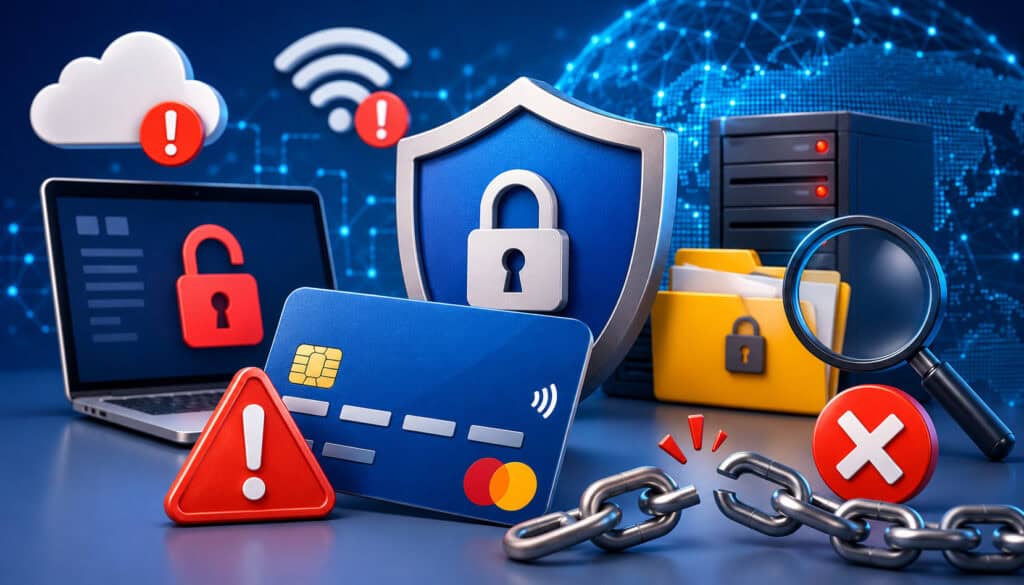
One of the most common PCI compliance mistakes is manual card storage. High-risk merchants may think it is convenient to keep card numbers on file for future billing, refunds, customer support, or backup processing. This creates unnecessary risk and can greatly expand PCI scope. Use tokenization instead.
Weak passwords are another frequent problem. Admin portals, gateway dashboards, shopping carts, email accounts, and billing systems should not use reused or simple passwords. Shared credentials create accountability problems and make it easier for unauthorized users to access sensitive systems.
Outdated software is also dangerous. Ecommerce platforms, plugins, POS software, operating systems, payment applications, and security tools should be updated consistently. Attackers often target known vulnerabilities, especially in shopping carts and checkout-related plugins.
Unsecured Wi-Fi can expose payment systems to risk. Merchants should separate guest networks from business systems, protect routers, change default passwords, and limit access to systems used for payment administration.
Poor employee training creates avoidable compliance issues. Employees may accidentally request card numbers through email, save payment details in notes, process refunds incorrectly, or click phishing links that compromise admin accounts. Training should be practical and repeated regularly.
Missing policies can also create problems. A merchant may have good tools but no written process for access management, refunds, suspicious orders, password requirements, vendor reviews, or incident reporting. Without documentation, security becomes inconsistent.
Unmonitored payment systems are another serious issue. Fraud patterns, suspicious refunds, repeated failed payment attempts, unusual login activity, and sudden chargeback spikes should be reviewed. Monitoring supports both PCI compliance and fraud prevention.
Payment Security Best Practices
Payment security best practices help high-risk merchants move beyond minimum compliance and build a safer operating environment. The goal is to protect cardholder data, reduce fraud, maintain secure checkout, and support long-term merchant account compliance.
Encryption is a foundational safeguard. Payment data should be encrypted during transmission, especially when customers enter card details online or when payment systems communicate with gateways. Merchants should avoid any process that sends card data through unsecured email, chat, forms, or file uploads.
Tokenization is especially valuable for recurring billing. Instead of storing full card numbers, merchants can store tokens that represent payment credentials inside a secure vault. This reduces exposure and supports safer subscription billing, customer reorders, and account updates.
PCI-aware workflows should be built into daily operations. For example, customer support should send secure payment links instead of asking for card details. Billing teams should use approved gateway tools. Refunds should follow documented approval steps. Marketing teams should not install checkout scripts without review.
Fraud filters should be configured based on the business model. Useful controls may include address verification, card security code checks, IP review, velocity limits, device fingerprinting, transaction scoring, and manual review thresholds.
High-risk merchants should balance fraud prevention with customer experience so legitimate customers are not blocked unnecessarily.
Secure checkout also depends on transparency. Clear pricing, billing terms, refund policies, shipping timelines, contact details, and descriptor information can reduce confusion and disputes. A secure checkout page should not only protect data; it should help customers understand what they are buying and how they will be billed.
Transaction monitoring is essential. Review unusual order patterns, repeated declines, mismatched billing details, large first-time orders, excessive refund requests, and sudden increases in disputes. This connects PCI compliance with broader chargeback risk management.
Customer verification should be risk-based. A low-value repeat order may not need the same review as a high-value first-time order with mismatched details. The best approach uses layered controls rather than a single fraud rule.
How PCI Compliance Supports Chargeback and Fraud Prevention
PCI compliance supports chargeback and fraud prevention by reducing the ways payment data can be stolen, misused, mishandled, or disputed. While PCI compliance does not eliminate chargebacks, it strengthens the security foundation behind every transaction.
Unauthorized transactions are often connected to weak payment security, compromised credentials, exposed card data, or poor checkout controls. PCI-aligned practices such as encryption, tokenization, secure checkout, access controls, and monitoring help reduce these risks.
Data exposure can lead to serious consequences for high-risk merchants. If cardholder data is stored improperly or transmitted insecurely, a compromise can trigger customer disputes, processor review, reputational damage, and increased scrutiny. Strong payment data protection reduces exposure.
Fraud claims are also easier to investigate when systems are organized. Unique employee logins, transaction logs, order notes, refund records, and gateway reports help merchants understand what happened. Without logs, it becomes harder to respond to disputes or identify suspicious patterns.
Processor concerns are often tied to operational maturity. A merchant with clear security policies, consistent fraud controls, completed PCI documentation, and a history of monitoring risk is easier to support than a merchant with unclear workflows. PCI compliance can help show that the business takes payment security seriously.
Chargeback prevention also depends on clear customer communication. Secure checkout should be paired with clear billing descriptors, transparent terms, easy support access, delivery confirmation, refund policies, and subscription reminders where relevant.
PCI compliance, fraud prevention, and chargeback management work best together. PCI protects the payment environment. Fraud tools detect suspicious activity. Chargeback controls reduce disputes after the sale. Together, they support high-risk payment security and more stable processing.
Conclusion
PCI compliance helps high-risk merchants protect payment data, reduce fraud exposure, improve customer trust, and support stable payment processing. A practical PCI DSS checklist gives merchants a clear way to review secure networks, approved payment tools, encryption, tokenization, access controls, monitoring, vendor management, and written policies.
For high-risk merchants, compliance is not just about satisfying a requirement. It is part of building a safer payment environment. Strong cardholder data security can reduce unauthorized transactions, support chargeback prevention, and show processors that the business takes payment risk seriously.
The best PCI compliance guide for high-risk merchants is one that turns security into daily practice. Use secure checkout, avoid manual card storage, train employees, review vendors, monitor transactions, and document payment workflows. These steps create a stronger foundation for high-risk payment security and long-term merchant account compliance.