
High-risk businesses face more pressure around fraud, disputes, chargebacks, and account stability than standard ecommerce merchants. When payments happen online, the customer’s card is not physically present, which makes identity verification harder and increases exposure to unauthorized transactions.
That is where 3D Secure 2.0 for high-risk businesses becomes valuable. It adds a smarter authentication layer to online card payments, helping businesses confirm that the person making the purchase is more likely to be the legitimate cardholder.
3D Secure 2.0 can support ecommerce fraud prevention, secure online payments, card-not-present fraud protection, and stronger payment authentication without forcing every customer through a disruptive checkout step.
What Is 3D Secure 2.0?
3D Secure 2.0 is a payment authentication protocol used to verify cardholder identity during online transactions. It improves on earlier 3D Secure systems by using richer transaction data, risk-based analysis, and smoother customer verification methods.
Instead of automatically sending every shopper through a password screen, 3D Secure 2.0 allows issuers to evaluate transaction risk in the background. The system can review information such as device data, transaction amount, purchase history, billing details, shipping details, and behavioral signals.
When a transaction appears low risk, the customer may complete checkout through frictionless authentication. That means the authentication happens quietly behind the scenes. When risk is higher, the issuer may require a challenge, such as a one-time passcode, banking app approval, or biometric verification.
For high-risk merchants, this creates a better balance between security and conversion. The business gains stronger identity verification, while legitimate customers are less likely to be interrupted unnecessarily.
This makes 3D Secure 2.0 high-risk payment processing especially useful for businesses that operate online, accept recurring payments, sell higher-ticket products, or experience elevated dispute activity.
For additional context on 3D Secure fraud protection, this informational guide on 3D Secure fraud prevention explains how authentication can help protect online transactions.
Why High-Risk Businesses Need 3D Secure 2.0
High-risk businesses often deal with more fraud attempts, more disputed transactions, stricter processor reviews, and higher chargeback monitoring. These issues can affect cash flow, reserve requirements, transaction approval rates, and long-term payment processing stability.
Card-not-present transactions are especially vulnerable because the merchant cannot physically inspect the card or verify the buyer in person. Fraudsters may use stolen card data, compromised accounts, synthetic identities, or automated checkout attempts to complete unauthorized purchases.
Recurring billing also adds risk. Customers may forget about subscriptions, misunderstand billing terms, or dispute transactions they previously approved. In other cases, account takeovers can allow criminals to place orders using stored payment details.
3D Secure 2.0 helps address these risks by adding issuer-backed authentication to the checkout process. When properly configured, it can help confirm customer identity, reduce fraud-related disputes, and improve the credibility of the transaction record.
Businesses should also combine 3D Secure with other controls, such as fraud filters, address verification, transaction monitoring, and clear billing policies. Resources on chargeback risk reduction for high-risk merchants and secure payment processing for high-risk businesses can help merchants understand how these layers work together.
| Fraud Risk | How 3D Secure 2.0 Helps | Business Benefit |
| Stolen card use | Adds issuer authentication before approval | Reduces unauthorized purchases |
| Account takeover | Flags unusual device or behavioral activity | Helps block suspicious transactions |
| Friendly fraud | Creates stronger authentication evidence | Supports dispute defense |
| Recurring billing disputes | Adds verification for higher-risk payment events | Improves billing confidence |
| High-value orders | Triggers challenge flows when risk is elevated | Protects larger transactions |
| Bot-driven fraud | Uses transaction and device data to assess risk | Reduces automated abuse |
3D Secure Authentication for High-Risk Merchants
3D Secure authentication for high-risk merchants helps verify that the customer completing the transaction has a stronger connection to the card being used. This matters because many online disputes begin with a simple claim: “I did not authorize this transaction.”
Authentication tools can add another layer of evidence. When an issuer validates the customer through a frictionless approval or challenge flow, the merchant may gain a stronger transaction record. That record can help distinguish legitimate buyers from suspicious activity.
For high-risk merchants, authentication is especially important on transactions that involve expensive products, digital goods, subscription plans, delayed delivery, or unusual purchase behavior. These categories often attract fraudsters because they may be easier to resell, harder to recover, or more likely to create disputes.
3D Secure 2.0 does not remove every risk, but it improves identity confirmation at a critical moment: before authorization is completed.
High-Risk Merchant Fraud Prevention With 3D Secure 2.0
High-risk merchant fraud prevention with 3D Secure 2.0 works by giving issuers more information before they approve or challenge a transaction. Instead of relying only on basic card data, the authentication process can evaluate contextual signals.
These signals may include transaction size, device information, shipping behavior, customer history, browser data, and other risk indicators. If the transaction appears normal, the issuer may allow a frictionless approval. If the transaction looks unusual, the issuer can require a stronger customer challenge.
This risk-based approach supports better ecommerce fraud prevention because it avoids treating every transaction the same. A returning customer using a familiar device may pass smoothly. A new customer placing a large order from an unusual device may face extra verification.
For high-risk businesses, that distinction matters. It protects checkout conversion while still applying more scrutiny where the risk is higher.
3D Secure 2.0 Chargeback Prevention
3D Secure 2.0 chargeback prevention is one of the most important benefits for high-risk businesses. Fraud-related chargebacks can damage processing relationships, increase costs, and create account instability.
When a customer completes a transaction with successful authentication, the business may have stronger evidence that the buyer participated in the purchase. In some cases, liability rules may also shift depending on card network rules, issuer participation, transaction type, and authentication outcome.
Even when liability shift does not apply, the authentication data can still support dispute management. It may show that the transaction passed issuer review, that the customer completed a challenge, or that the transaction was evaluated through a recognized authentication protocol.
3D Secure 2.0 should not replace refund communication, clear descriptors, or customer support. But when combined with those practices, it can reduce preventable disputes and improve long-term payment stability.
How 3D Secure 2.0 Works in Payment Processing
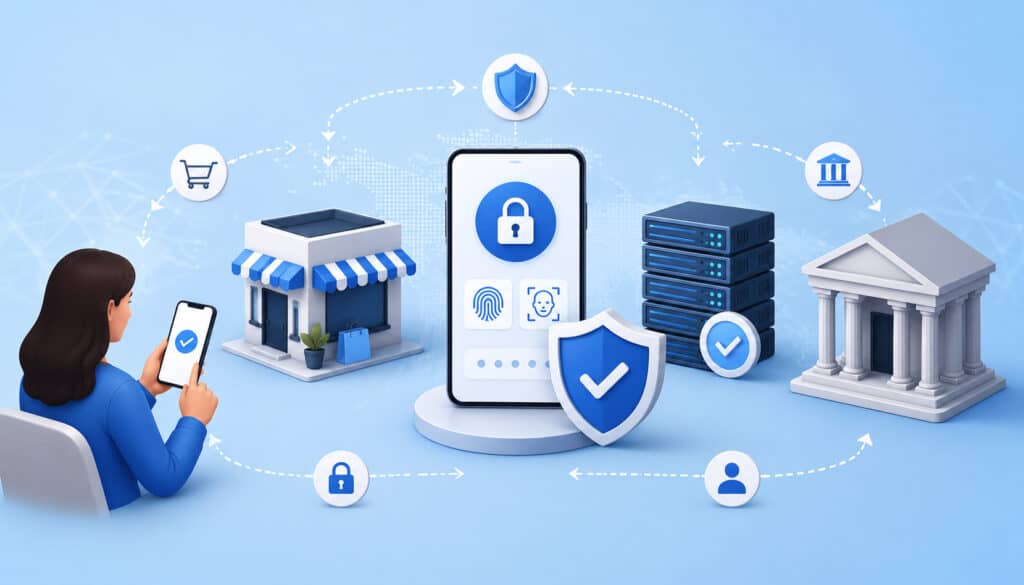
The 3D Secure 2.0 process begins when a customer enters payment details at checkout. The payment gateway or authentication provider sends transaction data to the card issuer through the 3D Secure system.
The issuer reviews the data and decides whether the transaction appears low risk or needs more verification. If the transaction is low risk, it may be approved through frictionless authentication. The customer may not see any additional step.
If the issuer needs more confidence, the transaction enters a challenge flow. The customer may be asked to verify identity using a passcode, banking app confirmation, biometric approval, or another supported method.
After authentication is complete, the transaction continues to authorization. At that point, the issuer decides whether to approve or decline the payment based on funds, account status, fraud rules, and authentication results.
For high-risk businesses, the payment gateway must support the full flow properly. A poor integration can create checkout errors, unnecessary declines, or customer confusion.
Key Benefits of 3D Secure 2.0 for High-Risk Businesses
The biggest benefit of 3D Secure 2.0 for high-risk businesses is stronger payment authentication. It gives merchants a structured way to verify customers before accepting online payments.
It can also reduce fraud by helping issuers detect suspicious transactions before approval. Fraudsters are less likely to complete purchases when additional verification is required.
Another major benefit is lower chargeback exposure. Fraud-related disputes are costly, and excessive chargebacks can lead to higher fees, reserves, account reviews, or even processing interruptions.
3D Secure 2.0 can also improve customer trust. When customers see secure payment gateways for high-risk businesses using recognized authentication tools, they may feel more confident entering card details online.
Other benefits include:
- Reduced unauthorized transactions
- Stronger card-not-present fraud protection
- Better high-risk payment security
- Improved transaction screening
- More reliable dispute documentation
- Better processor relationships
- Potential improvement in approval quality
Businesses comparing gateway options should review features such as fraud tools, tokenization, reporting, chargeback alerts, and authentication support. This guide on choosing a high-risk payment gateway is useful for evaluating security and integration needs.
Payment Security Best Practices Alongside 3D Secure 2.0
3D Secure 2.0 is powerful, but it should not be the only defense. High-risk businesses need layered security because fraud can appear in many forms.
Encryption helps protect sensitive payment data during transmission. Tokenization replaces card details with secure tokens, reducing the amount of sensitive data stored in business systems.
Fraud filters can flag suspicious transactions based on velocity, device reputation, location mismatch, order value, and customer behavior. Address verification and CVV checks add more screening at checkout.
Secure checkout systems should be updated regularly. Outdated plugins, weak passwords, and poor user permissions can expose ecommerce stores to avoidable risk.
Useful controls include:
- Encryption for payment data
- Tokenization for stored credentials
- Address verification
- CVV verification
- Velocity limits
- Device and behavioral monitoring
- User permission controls
- Manual review for suspicious orders
- Clear refund and cancellation policies
Common Online Payment Security Mistakes Businesses Make
Many payment security problems come from avoidable mistakes. One common issue is relying only on basic checkout protection while ignoring fraud trends, chargeback reports, and customer behavior.
Another mistake is using outdated ecommerce systems. Old plugins, unsupported checkout pages, and weak integrations can create vulnerabilities that fraudsters exploit.
Unclear billing descriptors also create disputes. If customers do not recognize the charge on their statement, they may contact their issuer instead of the business.
Poor refund communication is another risk. Customers who cannot find refund terms, cancellation steps, or support contact details may file disputes out of frustration.
Weak password policies can expose admin accounts, customer accounts, and payment settings. Businesses should require strong passwords, multi-factor access where possible, and limited staff permissions.
Missing verification tools can also increase risk. Without 3D Secure authentication, fraud filters, address checks, and transaction monitoring, the business may approve too many risky payments.
How to Implement 3D Secure 2.0 for High-Risk Businesses
Implementation starts with choosing a payment gateway that supports 3D Secure 2.0. The gateway should also support ecommerce integration, mobile checkout, recurring billing needs, reporting, fraud tools, and chargeback management.
Next, confirm processor support. Some businesses need specific gateway settings, authentication rules, or risk thresholds based on their industry, transaction size, or dispute history.
Ecommerce integration should be tested carefully. The checkout page must handle frictionless authentication, challenge flows, failed authentication, declined transactions, and mobile verification.
Employee training is also important. Customer service teams should understand what authentication is, how to explain failed payments, and when to escalate suspicious transactions.
Implementation steps include:
- Choose a compatible gateway
- Confirm processor and issuer support
- Enable 3D Secure settings
- Test desktop and mobile checkout
- Review challenge flow behavior
- Train support and fraud review teams
- Monitor authentication reports
- Adjust rules based on real transaction data
Businesses that sell online should also review broader acceptance and risk controls. This resource on how high-risk businesses accept payments online covers related gateway and fraud prevention considerations.
Challenges and Limitations of 3D Secure 2.0
3D Secure 2.0 improves payment security, but it is not perfect. Some transactions may still be fraudulent, especially if criminals control the cardholder’s device, email, or banking credentials.
Customer friction is another concern. Although 3D Secure 2.0 supports frictionless authentication, some transactions still require challenges. If the challenge is confusing or slow, the customer may abandon checkout.
False declines can also happen. A legitimate transaction may look risky due to travel, device changes, order size, or unusual buying behavior.
Integration complexity is another issue. Poor setup can cause failed authentication, broken checkout flows, mobile display problems, or incomplete transaction data.
Compatibility can vary across gateways, issuers, cards, regions, and ecommerce platforms. Businesses should monitor performance instead of assuming every transaction will behave the same way.
The best approach is balance. High-risk payment security should protect the business without making legitimate customers feel blocked or distrusted.
Best Practices for Long-Term Payment Security
Long-term payment security requires ongoing review. Fraud patterns change, customer behavior changes, and payment systems need regular updates.
High-risk businesses should monitor transaction activity daily or weekly, depending on volume. Unusual spikes in order value, repeated failed payments, mismatched addresses, or multiple cards from the same device should be reviewed.
Fraud reports should be compared with chargeback reports. If fraud filters are approving transactions that later become disputes, rules may need adjustment.
Ecommerce systems should be updated consistently. This includes plugins, checkout pages, security certificates, admin permissions, and gateway integrations.
Employees should receive regular training on suspicious orders, refund communication, customer verification, and dispute documentation.
Best practices include:
- Monitor transaction activity
- Review fraud reports
- Update ecommerce systems
- Train employees regularly
- Keep refund policies clear
- Use layered fraud prevention tools
- Review chargeback trends
- Test checkout flows
- Maintain accurate billing descriptors
- Document suspicious activity
A strong security strategy is not static. It should evolve as transaction data, customer behavior, and fraud patterns change.
How does 3D Secure 2.0 help high-risk businesses?
It helps high-risk businesses by strengthening identity verification, reducing fraud exposure, and improving transaction security. Since high-risk merchants often face more scrutiny from processors, stronger authentication can support more stable payment operations.
It also helps create better transaction records. When a payment is authenticated, the business may have stronger evidence if a fraud-related dispute occurs.
Can 3D Secure 2.0 reduce chargebacks?
Yes, 3D Secure 2.0 can help reduce fraud-related chargebacks. It verifies more transactions before approval and may provide stronger authentication evidence during disputes.
However, it will not prevent every chargeback. Businesses still need clear refund policies, recognizable billing descriptors, responsive support, and strong fraud monitoring.
Does 3D Secure 2.0 improve fraud prevention?
Yes. It improves fraud prevention by allowing issuers to evaluate transaction risk using more data. Low-risk transactions may pass smoothly, while higher-risk transactions can require stronger verification.
This makes it useful for ecommerce fraud prevention, card-not-present fraud protection, and high-risk payment security.
Is 3D Secure 2.0 required for ecommerce businesses?
Requirements depend on the payment environment, processor rules, card network rules, gateway setup, and business risk profile. Even when it is not strictly required, many high-risk businesses use it because it can reduce fraud and support stronger payment authentication. Businesses should ask their gateway or processor how 3D Secure 2.0 applies to their transaction types.
Can 3D Secure 2.0 affect checkout speed?
Yes, but not always negatively. Many transactions can pass through frictionless authentication without adding a visible customer step. Checkout may slow down when a challenge is required. The goal is to apply extra verification only when risk signals justify it.
What payment gateways support 3D Secure 2.0?
Many modern payment gateways support 3D Secure 2.0, but support varies by platform, processor, integration type, and merchant account setup. High-risk businesses should confirm support before choosing a gateway.
Look for secure payment gateways for high-risk businesses that also offer fraud scoring, tokenization, address verification, CVV checks, reporting, and chargeback tools.
How should businesses combine 3D Secure 2.0 with other fraud prevention tools?
Businesses should combine 3D Secure 2.0 with encryption, tokenization, fraud filters, address verification, CVV checks, transaction monitoring, and clear customer communication.
The goal is layered protection. 3D Secure authentication helps verify the buyer, while other tools help detect suspicious behavior, protect payment data, and reduce disputes.
Conclusion
3D Secure 2.0 for high-risk businesses is an important tool for stronger online payment authentication, reduced fraud exposure, and better chargeback prevention. It helps protect card-not-present transactions by giving issuers more data and giving customers secure verification options when needed.
For high-risk merchants, the value goes beyond fraud reduction. 3D Secure 2.0 can support better processor relationships, stronger dispute evidence, improved checkout security, and more stable long-term payment processing.
The best results come from using 3D Secure 2.0 alongside layered fraud controls, clear customer policies, secure checkout systems, and ongoing transaction monitoring. When implemented thoughtfully, it helps businesses accept payments with greater confidence while maintaining a smoother customer experience.