
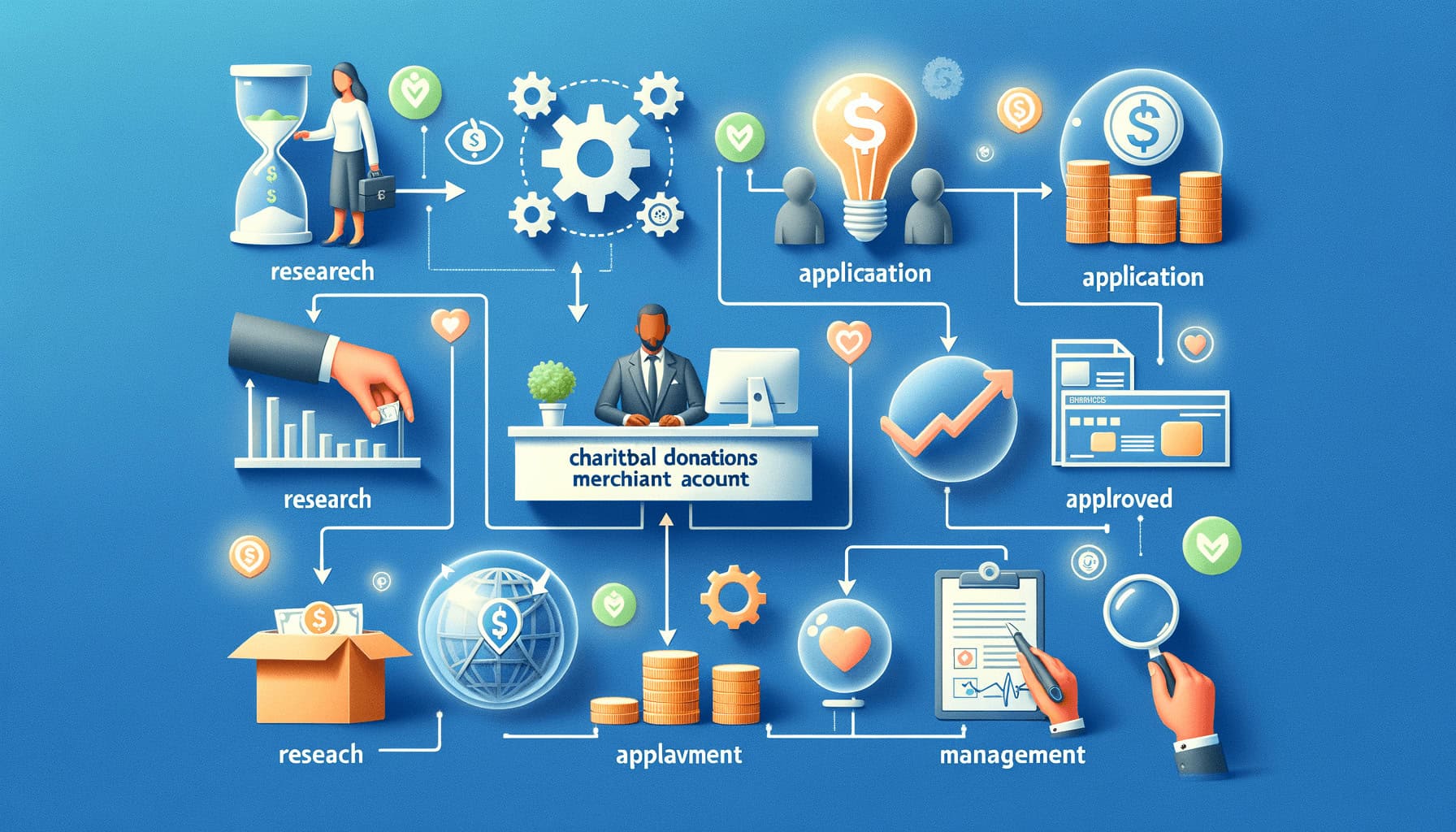
Obtaining a Charitable Donations Merchant Account is a crucial step for non-profit organizations that wish to accept donations electronically. This process involves several steps, including understanding the nature of such accounts, researching potential providers, preparing necessary documentation, and completing the application process.
This guide will provide a comprehensive overview of these steps, helping non-profit organizations navigate the process of obtaining a merchant account specifically designed for accepting charitable donations.
Understanding the Process of Obtaining a Charitable Donations Merchant Account
Obtaining a charitable donations merchant account is a crucial step for any non-profit organization that wishes to accept donations electronically. This type of account allows charities to receive funds through credit and debit card transactions, making it easier for donors to contribute and for organizations to manage their finances. The process of obtaining such an account involves several steps, each of which requires careful consideration and planning.
Firstly, it is important to understand what a charitable donations merchant account is. Essentially, it is a type of bank account that allows non-profit organizations to accept electronic payments. This is particularly useful in today’s digital age, where many people prefer to make donations online or via mobile apps. A merchant account not only facilitates these transactions but also provides a secure platform for handling sensitive financial information.
The process of obtaining a charitable donations merchant account begins with selecting a suitable provider. There are many merchant account providers available, each offering different features and pricing structures. It is important to choose a provider that understands the unique needs of non-profit organizations and offers services tailored to these needs. Some providers specialize in working with charities and offer discounted rates or special features designed to make managing donations easier.
Once a suitable provider has been selected, the next step is to apply for the account. This typically involves filling out an application form and providing various documents. These may include the organization’s tax-exempt status certificate, financial statements, and information about the organization’s mission and activities. The provider will review these documents to assess the organization’s eligibility for a merchant account.
After the application has been submitted, the provider will conduct a thorough review. This may involve checking the organization’s credit history, assessing its financial stability, and verifying its non-profit status. The provider may also evaluate the organization’s risk level, as merchant accounts are often associated with certain risks, such as chargebacks and fraud. If the organization is deemed to be a low risk and meets all the provider’s criteria, it will be approved for a merchant account.
Once the account has been approved, the organization can start accepting electronic donations. The provider will set up the necessary equipment and software, and provide training on how to use them. This may include setting up a payment gateway for online donations, installing card readers for in-person donations, and integrating the system with the organization’s existing financial software.
Step-by-Step Guide to Setting Up a Charitable Donations Merchant Account

Obtaining a charitable donations merchant account is a crucial step for any non-profit organization that wishes to accept donations electronically. This type of account allows organizations to process credit and debit card transactions, making it easier for donors to contribute to their cause. The process of setting up a charitable donations merchant account can seem daunting, but by following a step-by-step guide, it can be made significantly simpler.
To begin with, it is important to understand what a merchant account is. Essentially, it is a type of bank account that allows businesses to accept payments in multiple ways, typically debit or credit cards. A charitable donations merchant account is a specific type of merchant account designed for non-profit organizations. It allows these organizations to accept donations electronically, providing a convenient option for donors and a reliable income stream for the organization.
The first step in setting up a charitable donations merchant account is to choose a merchant services provider. There are many providers to choose from, each with their own fees, terms, and conditions. It is important to research each provider thoroughly, comparing their services and costs to find the one that best suits your organization’s needs. Some providers specialize in working with non-profit organizations, offering discounted rates and other benefits.
Once you have chosen a provider, the next step is to apply for a merchant account. This typically involves filling out an application form and providing certain documents. These may include your organization’s tax-exempt status documentation, bank account information, and details about your organization’s structure and operations. The provider will use this information to assess your organization’s eligibility for a merchant account.
After your application has been submitted, the provider will review it. This process can take anywhere from a few days to a few weeks, depending on the provider. They may ask for additional information or documentation during this time. Once the review is complete, the provider will either approve or deny your application. If approved, your organization will be able to start accepting electronic donations.
The final step in setting up a charitable donations merchant account is to integrate it with your organization’s website. This usually involves adding a “Donate” button to your site, which links to a secure payment page where donors can enter their credit or debit card information. The provider will typically provide instructions on how to do this, or they may offer to do it for you for a fee.
Key Requirements for Obtaining a Charitable Donations Merchant Account

Obtaining a charitable donations merchant account is a crucial step for any non-profit organization that wishes to accept donations electronically. This type of account allows charities to process credit card transactions, making it easier for donors to contribute to their cause. However, the process of obtaining such an account involves meeting certain key requirements, which are designed to ensure the legitimacy of the organization and the security of the transactions.
Firstly, the organization must be legally recognized as a non-profit entity. This typically involves obtaining a 501(c)(3) status from the Internal Revenue Service (IRS) in the United States, or an equivalent status from the relevant tax authority in other countries. This status not only confirms the non-profit nature of the organization but also provides donors with the assurance that their contributions are tax-deductible.
Secondly, the organization must have a clear and detailed business plan. This should outline the organization’s mission, its strategies for achieving its goals, and its financial projections. The business plan should also include information about the organization’s leadership team and their qualifications. This information is important because it gives potential merchant account providers confidence in the organization’s ability to manage its finances effectively.
Thirdly, the organization must have a secure website. This is because most charitable donations merchant accounts are used to process online donations. The website should be professionally designed, easy to navigate, and equipped with secure socket layer (SSL) encryption to protect donors’ personal and financial information. In addition, the website should clearly display the organization’s contact information and its non-profit status.
Fourthly, the organization must have a good credit history. Just like any other business, non-profit organizations are subject to credit checks when applying for a merchant account. A good credit history indicates that the organization is financially responsible and less likely to cause problems for the merchant account provider.
Lastly, the organization must be prepared to comply with the rules and regulations set by the merchant account provider. These may include rules about the types of donations that can be accepted, the procedures for handling disputes and chargebacks, and the fees that will be charged for the service. It’s important for the organization to understand these rules and to be prepared to follow them.
Avoiding Common Pitfalls in Applying for a Charitable Donations Merchant Account

Obtaining a charitable donations merchant account is a crucial step for any non-profit organization that wishes to accept online donations. This type of account allows organizations to process credit card transactions, making it easier for donors to contribute to their cause. However, the application process can be complex and fraught with potential pitfalls. By understanding these challenges and how to avoid them, non-profit organizations can streamline the process and increase their chances of approval.
One common pitfall in applying for a charitable donations merchant account is failing to provide complete and accurate information. The application process typically requires detailed information about the organization, including its legal structure, financial history, and fundraising activities. Any inaccuracies or omissions can lead to delays or even denial of the application. Therefore, it is essential to gather all necessary information before starting the application and to double-check all entries for accuracy.
Another common mistake is not understanding the fees associated with a charitable donations merchant account. These can include setup fees, transaction fees, and monthly maintenance fees. Some providers may also charge additional fees for services such as fraud protection or customer support. It’s important to thoroughly review the fee structure and terms of service before signing any agreement. This will help avoid any unexpected costs down the line and ensure that the account is cost-effective for the organization.
A third pitfall is failing to consider the provider’s reputation and customer service. Not all merchant account providers are created equal. Some may offer lower fees but provide poor customer service or lack the necessary security measures to protect sensitive donor information. Therefore, it’s crucial to research potential providers thoroughly, read reviews, and ask for references. This will help ensure that the chosen provider is reliable, reputable, and capable of meeting the organization’s needs.
In addition, many organizations make the mistake of not considering the compatibility of the merchant account with their existing systems. The merchant account should integrate seamlessly with the organization’s website and donor management system. If it doesn’t, this could create additional work for staff and potentially disrupt the donation process for donors. Therefore, it’s important to confirm that the merchant account is compatible with the organization’s systems before proceeding with the application.
Lastly, some organizations overlook the importance of compliance with Payment Card Industry Data Security Standard (PCI DSS) requirements. These standards are designed to protect sensitive cardholder data and must be adhered to by all organizations that accept credit card payments. Failure to comply can result in fines and damage to the organization’s reputation. Therefore, it’s crucial to ensure that the chosen merchant account provider is PCI DSS compliant and that the organization has the necessary systems and procedures in place to maintain compliance.
Maximizing the Benefits of Your Charitable Donations Merchant Account
Charitable organizations play a crucial role in society, providing much-needed services and support to various causes. To maximize their impact, these organizations often rely on donations from generous individuals and corporations. In today’s digital age, the ability to accept these donations online is a necessity. This is where a charitable donations merchant account comes into play.
A charitable donations merchant account is a type of bank account that allows non-profit organizations to accept credit and debit card donations online. This account is set up through a merchant services provider, which acts as an intermediary between the organization and the card networks. The provider processes the transactions, deposits the funds into the merchant account, and charges a fee for this service.
Obtaining a charitable donations merchant account involves several steps. First, the organization must choose a merchant services provider. This decision should be based on factors such as the provider’s reputation, fees, and customer service. Once the provider has been chosen, the organization must complete an application process. This typically involves providing information about the organization’s mission, financial history, and projected donation volume. The provider will then review this information and decide whether to approve the application.
Once the account is set up, the organization can start accepting online donations. However, simply having the account is not enough to maximize its benefits. The organization must also implement strategies to encourage donations and make the donation process as easy as possible for donors.
One way to encourage donations is through effective marketing. This can involve promoting the organization’s mission and the impact of donations through various channels, such as social media, email newsletters, and the organization’s website. The organization can also offer incentives for donations, such as recognition on the website or special events for major donors.
Making the donation process easy for donors is another crucial strategy. This can involve integrating the donation form into the organization’s website, so donors do not have to leave the site to make a donation. The form should be simple and intuitive, with clear instructions and as few steps as possible. The organization should also offer multiple payment options, such as credit and debit cards, PayPal, and direct bank transfers, to cater to different donor preferences.
Another important aspect of maximizing the benefits of a charitable donations merchant account is ensuring the security of donors’ financial information. This involves choosing a merchant services provider that uses advanced security measures, such as encryption and tokenization, to protect against data breaches. The organization should also comply with the Payment Card Industry Data Security Standard (PCI DSS), which sets the requirements for organizations that handle cardholder information.
Navigating the Legal Aspects of a Charitable Donations Merchant Account
Obtaining a charitable donations merchant account is a crucial step for any non-profit organization that wishes to accept donations electronically. This type of account allows charities to process credit and debit card transactions, making it easier for donors to contribute to their cause. However, navigating the legal aspects of obtaining and maintaining a charitable donations merchant account can be complex. It requires a thorough understanding of the laws and regulations that govern charitable giving and electronic transactions.
Firstly, it is important to understand that a charitable donations merchant account is not the same as a regular business merchant account. Charitable organizations are subject to different rules and regulations, and these must be adhered to when setting up and managing the account. For instance, charities must ensure that they are compliant with the Payment Card Industry Data Security Standard (PCI DSS), a set of security standards designed to ensure that all companies that accept, process, store or transmit credit card information maintain a secure environment.
In addition, charities must also comply with the regulations set out by the Internal Revenue Service (IRS). This includes ensuring that all donations are properly recorded and reported, and that donors are provided with the necessary documentation for tax purposes. Failure to comply with these regulations can result in penalties and could potentially jeopardize the charity’s tax-exempt status.
Furthermore, charities must also be aware of the laws and regulations that govern electronic transactions. This includes the Electronic Fund Transfer Act (EFTA), which establishes the rights, liabilities, and responsibilities of parties in electronic funds transfers, and the Fair Credit Billing Act (FCBA), which provides mechanisms for resolving billing errors on credit card accounts.
To navigate these legal aspects, it is advisable for charities to seek legal counsel. A lawyer with experience in non-profit law can provide guidance on the specific regulations that apply to the charity and can help ensure that the organization remains compliant. This can include advising on the necessary documentation and record-keeping practices, as well as providing guidance on how to handle disputes and chargebacks.
Moreover, it is also beneficial for charities to work with a reputable merchant services provider. These providers can offer valuable assistance in setting up and managing a charitable donations merchant account. They can provide guidance on the technical aspects of processing electronic donations, as well as help ensure that the charity is compliant with PCI DSS and other relevant regulations.
FAQs
Q.1: What is a Charitable Donations Merchant Account?
A Charitable Donations Merchant Account is a type of account that allows non-profit organizations to accept and process electronic payments, including credit and debit card transactions, for donations.
Q.2: How can I apply for a Charitable Donations Merchant Account?
You can apply for a Charitable Donations Merchant Account by contacting a merchant services provider, filling out an application form, and providing necessary documents such as your organization’s tax ID number, bank account details, and proof of non-profit status.
Q.3: What are the requirements to obtain a Charitable Donations Merchant Account?
The requirements may vary by provider, but generally, you will need to provide proof of your non-profit status, a business bank account, a tax ID number, and sometimes a processing history.
Q.4: Are there fees associated with a Charitable Donations Merchant Account?
Yes, there are typically fees associated with a Charitable Donations Merchant Account. These can include setup fees, monthly fees, transaction fees, and possibly other fees depending on the provider.
Q.5: Can all non-profit organizations apply for a Charitable Donations Merchant Account?
Yes, all non-profit organizations can apply for a Charitable Donations Merchant Account, but approval will depend on the provider’s requirements and the organization’s financial stability and processing history.
Q.6: How long does it take to get approved for a Charitable Donations Merchant Account?
The approval time for a Charitable Donations Merchant Account can vary by provider, but it typically takes between 24 hours to a few weeks.
Conclusion
In conclusion, obtaining a Charitable Donations Merchant Account involves several steps. First, you need to establish your organization as a non-profit entity. Then, you should research and select a merchant account provider that caters to charities, considering factors such as fees, transaction rates, and customer support. The next step is to apply for the account, providing all necessary documentation about your organization.
Once approved, you can set up your donation system, ensuring it is secure and user-friendly. Regular monitoring and management of the account is also crucial to ensure smooth transactions and maintain donor trust.